
Today, Afrobeats has become the sound of African pop, dominating playlists, charts and radio waves around the world. But way before the Grammys created a dedicated category for African performance, before “Calm Down” by Rema featuring Selena Gomez became the first African artist-led track to enter Spotify’s Billions Club, or “Love Nwantiti” reinvigorated the global ear, there was another African sound doing something remarkable: Congolese guitar music was travelling across the continent and leaving its mark.
From Kinshasa and Brazzaville, this style of music moved across borders, languages and cultures, eventually influencing musicians thousands of kilometres away. What makes this even more impressive is that it wasn’t carried by Spotify playlists or TikTok.
Instead, it travelled on records, radio, touring bands, migrant communities and sheer word of mouth. All things that required considerably more effort than opening Spotify to listen to the latest release.
The movement was so successful that by the 1960s and 1970s, you could hear the influence of Congolese music from West Africa to East Africa. And it all started with rumba.
During the colonial period, records from Cuba and other parts of the Caribbean circulated through the port cities of Central Africa. Cuban son and rumba became particularly influential, and African musicians began adapting these sounds to local musical traditions.
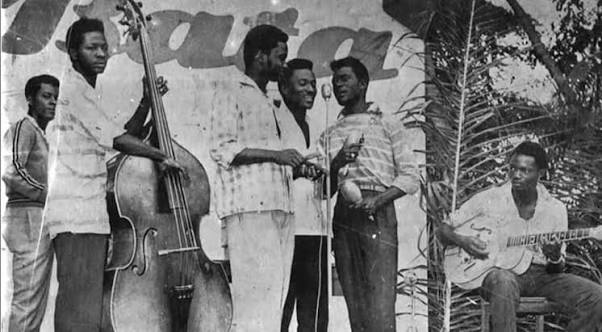
By the middle of the 20th century, musicians in what was then the Belgian Congo were creating their own version of the music. The result became known as Congolese rumba, with the guitar at the centre of it.
The sound was built around interlocking guitar lines, percussion, bass and vocals. It could be romantic and slow, but it could also become more energetic and dance-driven. What made it powerful was its adaptability. It sounded distinctly Congolese while still carrying echoes of the Caribbean, making it incredibly easy to export.
Image Credit: Afro Pop
Few people were more important to the spread of Congolese rumba than Franco Luambo and his band, OK Jazz.
Founded in 1956, OK Jazz became one of the most influential bands in African music. Franco’s guitar playing became legendary, and the band’s sound developed into something musicians across the continent wanted to imitate.
But Franco wasn’t simply making music for Congo. His music connected with people from all walks of life, and people were paying attention.
Across Africa, young musicians heard these guitar lines and realised they could take them somewhere else. This became one of the defining characteristics of Congolese music: it was incredibly good at travelling without losing its identity.
Congolese musicians became musical diplomats. Bands travelled to perform, musicians settled in other countries, and Congolese artists were recruited to form or strengthen bands across Africa.
One of the most famous examples was Tabu Ley Rochereau, whose music and touring career helped make Congolese rumba an international African sound. Then there was Dr Nico, whose guitar playing became hugely influential.
Their records were heard far beyond Central Africa, and wherever the music landed, local musicians adapted it.
When East Africa heard the Congolese guitar, it didn’t simply copy it. It made it its own.
Kenya became a major centre for the sound, with Congolese musicians and local artists helping popularise guitar-driven music. Kenyan musicians incorporated Congolese influences into their own styles, eventually feeding into what became known as Soukous and other regional guitar styles.
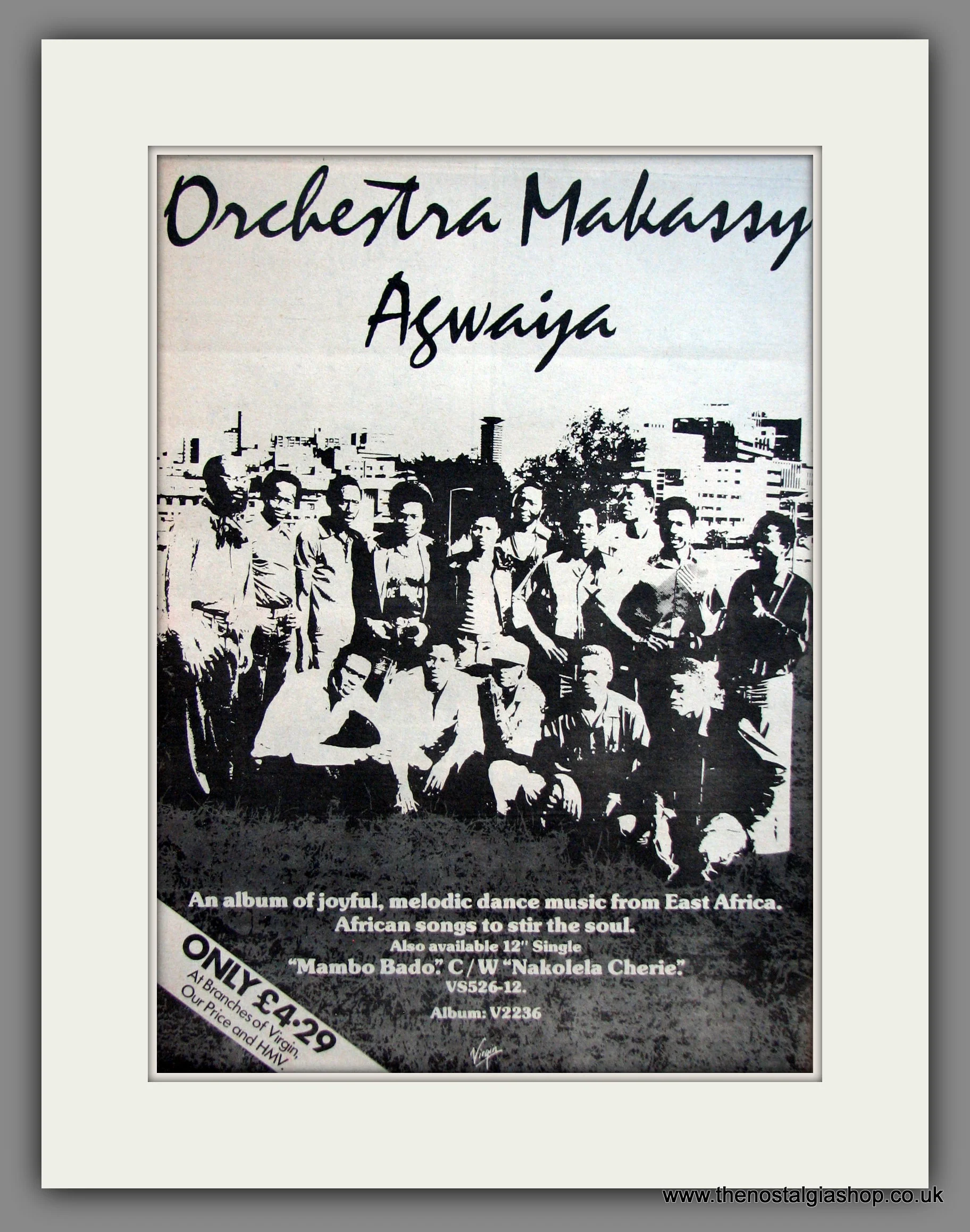
Image Credit: The Nostalgia Shop
In Tanzania, Congolese music became hugely popular too. Musicians developed styles that blended Congolese guitar with Swahili lyrics and local rhythms. Bands such as Orchestra Makassy became part of a musical ecosystem that crossed the boundaries between Congo, Tanzania, Kenya and beyond.
Suddenly, music created in Central Africa had become part of East Africa’s own musical vocabulary.
We are not new to this
Recency bias can sometimes make us talk about African music as if its global, cross-border success is something new. But it isn’t.
Sure, Fireboy DML featured Ed Sheeran on the remix of “Peru,” and Burna Boy and Shakira recently had one of the biggest songs of the year with “Dai Dai.” But African musicians have been moving between countries, borrowing sounds and creating new musical identities for decades. Congolese music was particularly good at this because the guitar was so portable. You didn’t need a huge orchestra. You needed a guitar, percussion, a few musicians and an audience.
The music could travel.
And it did.
It reached West Africa, where musicians incorporated Congolese guitar techniques into local styles. It reached East Africa, where it influenced the development of guitar-led popular music. It reached Southern Africa, where its rhythms and dance styles became part of broader regional musical culture.And because Africa’s music industries were connected through migration, radio, record shops and touring circuits, the sound kept moving.
By the 1970s and 1980s, Congolese rumba had evolved into Soukous — faster, more guitar-driven and built for dancing. The name is linked to the French secouer, meaning “to shake.” Artists like Kanda Bongo Man helped take its energetic sound beyond Congo and across Africa.
But the real story was what happened next.
Kenyan musicians adapted the guitar sound. Tanzanian artists put it into Swahili. Nigerian musicians blended it with local rhythms. And perhaps that is the real history of African music: it has never been one sound moving outward from one country. It has always been a conversation.
Congo played a riff. East Africa answered. West Africa borrowed it. Someone changed the rhythm. Someone added a new language. Someone made it faster.
And eventually, someone heard all of it and made something completely new.