How Theresa Kachindamoto Fought Child Marriage in Malawi
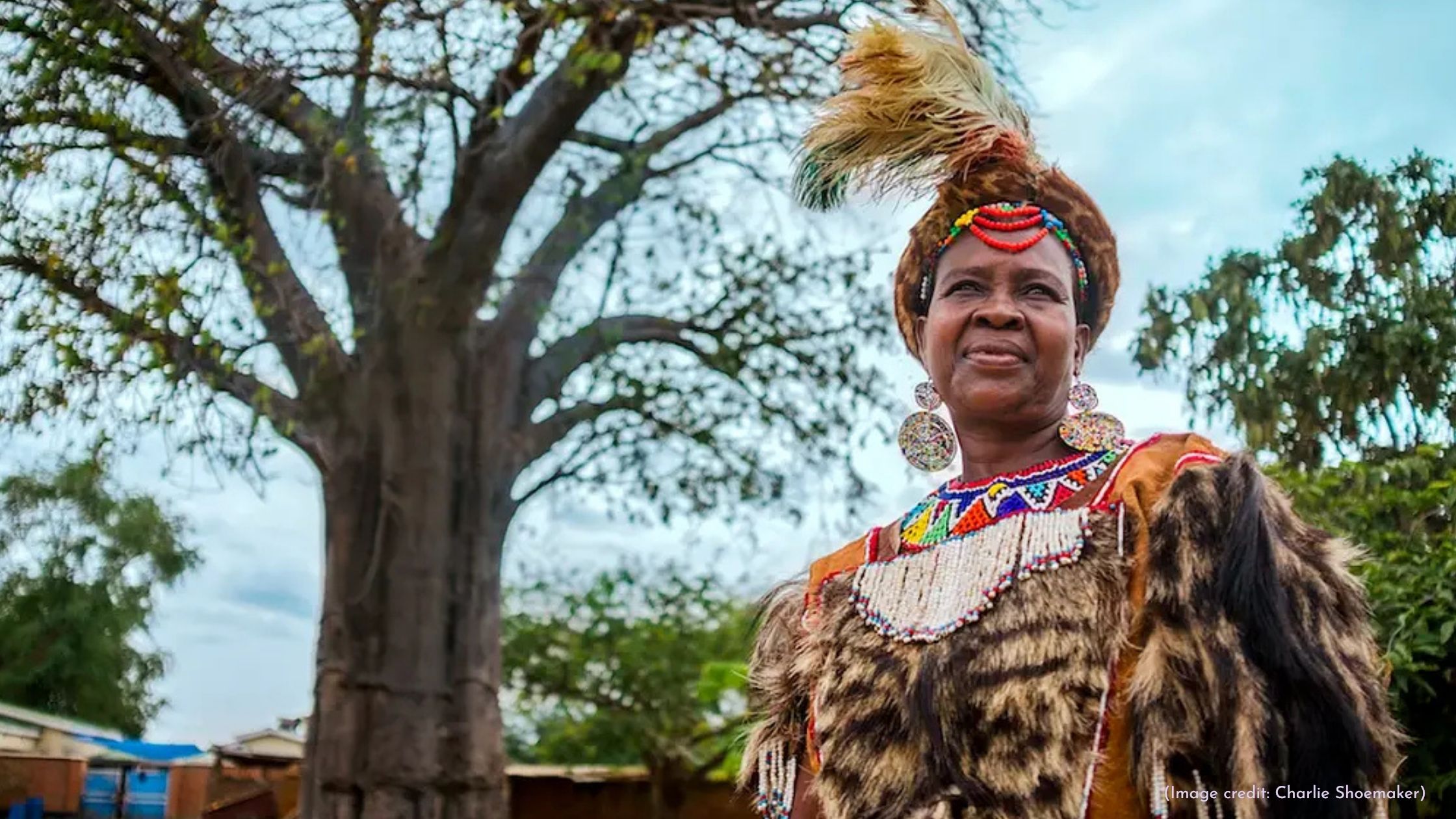
The day Theresa Kachindamoto was called home marked the beginning of a change no one anticipated.
For twenty-seven years, Theresa Kachindamoto lived a quiet life in Zomba. She worked as a secretary at a city college with no thought of returning to Monkey Bay. Then one day the chiefs and elders of Dedza District called her home.
In 2003, traditional leaders asked her to return to Dedza District and assume the role of Senior Chief. The request came as a surprise to her. After all, she was the youngest of twelve siblings and a mother of five boys.
Still, her family carried chieftain blood. Therefore, she accepted the responsibility.
Soon she left the city behind and travelled to Monkey Bay to lead her community. That moment marked the beginning of Theresa Kachindamoto child marriage reform efforts.
The reality she discovered in Dedza
Dedza District sits between Mozambique and Lake Malawi and holds more than 900,000 residents. Life there is shaped by poverty. Many families survive on extremely limited income.
Due to this pressure, parents often see early marriage as financial relief. Tradition also reinforces the practice across several rural communities.
A 2012 United Nations survey reported that more than half of Malawi’s girls married before eighteen. The same report ranked Malawi among countries with the highest child marriage rates globally.
Soon after assuming leadership, she began visiting villages across Dedza. Those visits revealed a troubling reality. Girls as young as twelve carried babies while living with teenage husbands. Meanwhile, many of them had already left school.
The situation disturbed her deeply. Young girls were saddled with adult responsibilities long before they understood them.
These conditions formed the backdrop of Theresa Kachindamoto child marriage reforms. It was a revelation that changed everything.
Traditions that trapped young girls
While investigating early marriages, she uncovered deeper cultural practices. Some girls were sent to initiation camps called kusasa fumbi, which means “cleansing.” These camps prepared girls for marriage by teaching them “how to please men.” However, several accounts revealed sexual exploitation inside these camps.
In some communities, men known as “hyenas” were hired to take girls’ virginity. Such practices exposed young girls to trauma, HIV risk, and serious health complications.
To change this harmful practice, Theresa Kachindamoto had to confront these traditions directly.
Resistance from families and community leaders
Change did not come easily. Many parents defended early marriage as cultural tradition. Others argued that marriage reduced the financial burden of raising daughters.
Some parents also questioned her authority. They insisted that a mother of sons should not lecture families about raising girls.
Even so, she continued meeting parents, teachers, and religious leaders across the district.
Turning authority into action
Eventually she shifted strategy. Rather than relying on persuasion alone, she used the power of traditional leadership. She summoned village headmen, church leaders, and community groups for discussions.
Afterward she required fifty sub-chiefs to sign agreements banning child marriage. The agreement also required existing child marriages to be annulled.
When several chiefs ignored the order, she dismissed them from their positions. Months later they returned after ending the marriages in their communities. Only then did she restore their leadership titles.
Ending initiation camps
Her efforts did not stop with marriage laws. She also banned kusasa fumbi initiation camps within areas under her authority. In addition, she introduced penalties for chiefs and religious leaders who supported the practice.
Sending girls back to school
Over time the results became visible. Thousands of child marriages were annulled across Dedza District. Many girls returned to school after leaving forced unions.
To protect them, volunteers became “secret mothers” and “secret fathers” in their communities. They monitored families and reported attempts to remove girls from school.
Because of these efforts, more girls stayed in classrooms instead of entering early marriages.
A chief who reshaped tradition
Her determination eventually earned her a powerful nickname. Across Malawi, she became known as the “Chief Terminator” of child marriages.
Yet her influence reached far beyond the title. Her leadership showed that traditional authority could challenge harmful traditions.
More importantly, Theresa Kachindamoto child marriage reforms helped shift national conversations about girls’ education. Because of that legacy, thousands of girls gained another chance at childhood and school.
Read More: