
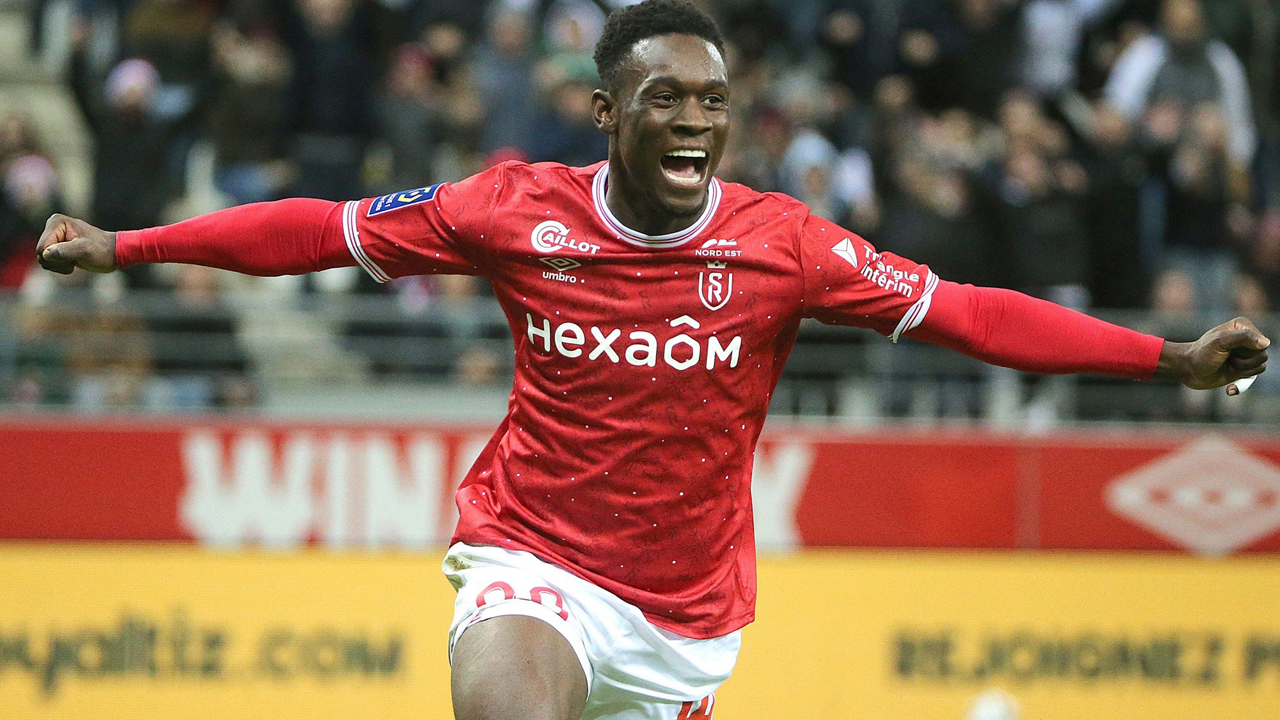
Long before he became the face of the United States’ World Cup campaign, Folarin Balogun was shaped by a different identity.
Born in New York to Nigerian parents and raised in London, the striker’s story is one that could only exist in modern football—a career defined by multiple homes, cultures and passports. At the 2026 FIFA World Cup, that background has become part of a much larger conversation about identity, migration and what it means to represent a nation.
Balogun announced himself on football’s biggest stage in spectacular fashion.
Making his FIFA World Cup debut against Paraguay on June 12, the 24-year-old scored twice in the first half, finding the net in the 31st and 45th minutes as the United States cruised to a 4-1 victory. The brace immediately placed him in the history books. He became just the second player ever to score multiple goals in a World Cup match for the United States, following Bert Patenaude, whose famous hat-trick also came against Paraguay back in 1930.
His performances have also reignited conversations in the United States about birthright citizenship and the country’s increasingly multicultural national team. As The New York Times recently observed, America’s best player at this World Cup is, in many ways, a product of birthright citizenship—a reminder that the country’s footballing future is increasingly being shaped by families whose stories stretch far beyond its borders.
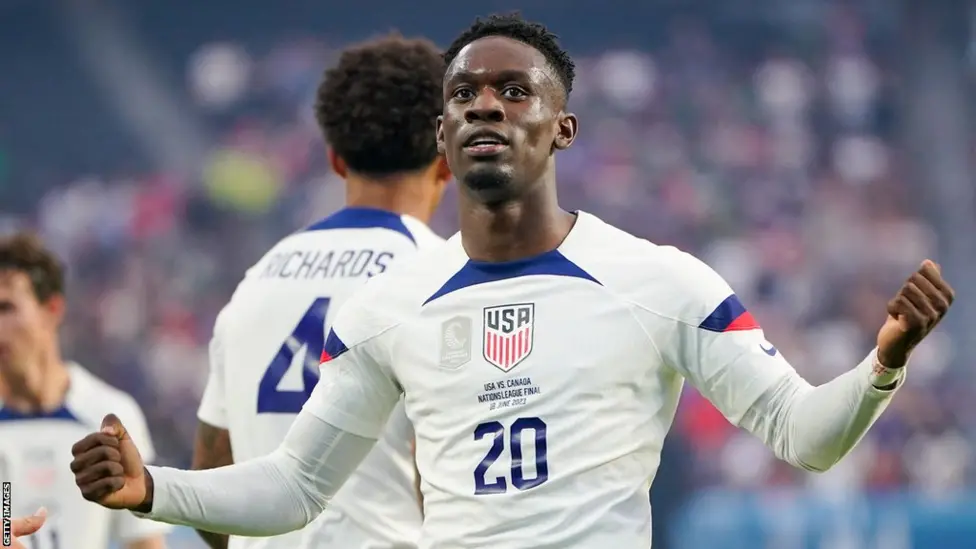
For Nigerians, however, Balogun’s rise feels familiar.
His Nigerian heritage isn’t just a footnote in his biography; it’s something he openly credits for shaping the person and player he has become.
Asked what his Nigerian roots have given him while competing on football’s biggest stage, Balogun didn’t hesitate.
“Everything,” he said.
“Coming from Nigeria, I think it’s turned me into a warrior. It’s made me strong. It’s given me a lot of hunger and desire, and it’s something I’m very proud of.”
This interview has been edited for clarity and flow.
Amplify Africa: Flo, how are you doing?
Folarin Balogun: I’m good, thank you.
Amplify Africa: First of all, Naija no dey carry last! I was actually the one leading that chant at the last game.
It’s great to speak with you. I wanted to ask—what have your Nigerian roots given you? As someone playing on the biggest stage in football, how has your Nigerian heritage shaped who you are?
Folarin Balogun: Yeah, everything, really. Coming from Nigeria, I think it’s turned me into a warrior. It’s made me strong. It’s given me a lot of hunger and desire, and it’s something I’m very proud of.
Amplify Africa: Flo, despite today’s result, do you feel the team was still able to build on the momentum from the opening game?
Folarin Balogun: Yeah, I think the boys put in a good performance. It’s always difficult to come in and play against any side when the team hasn’t played together regularly. I think the boys did their best, and the most important thing now is the game on Wednesday.
Amplify Africa: Brilliant. Thanks for your time, Flo. We appreciate it.
Folarin Balogun: Thank you.