
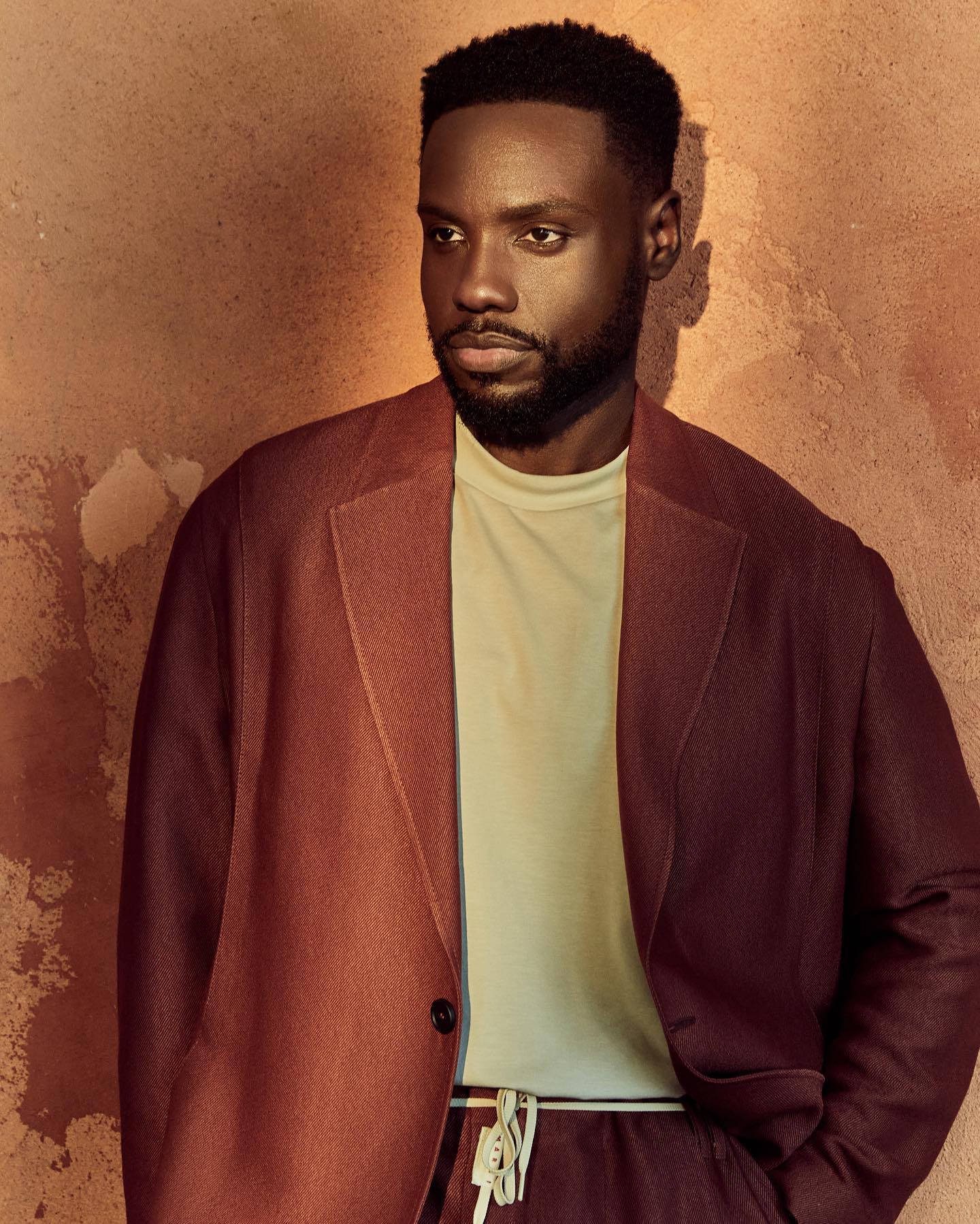
When I get on a Google Meet call with Dayo Okeniyi, he is in the middle of a lot of things. Not only is he in the middle of press for his hit Apple TV+ sci-fi series Dark Matter, but he is also preparing for an event with his non-profit, PVO Global, and, somewhat surprisingly, moving houses. It is undeniably a chaotic time, and yet, he is beaming with bright energy and it comes through in his voice.
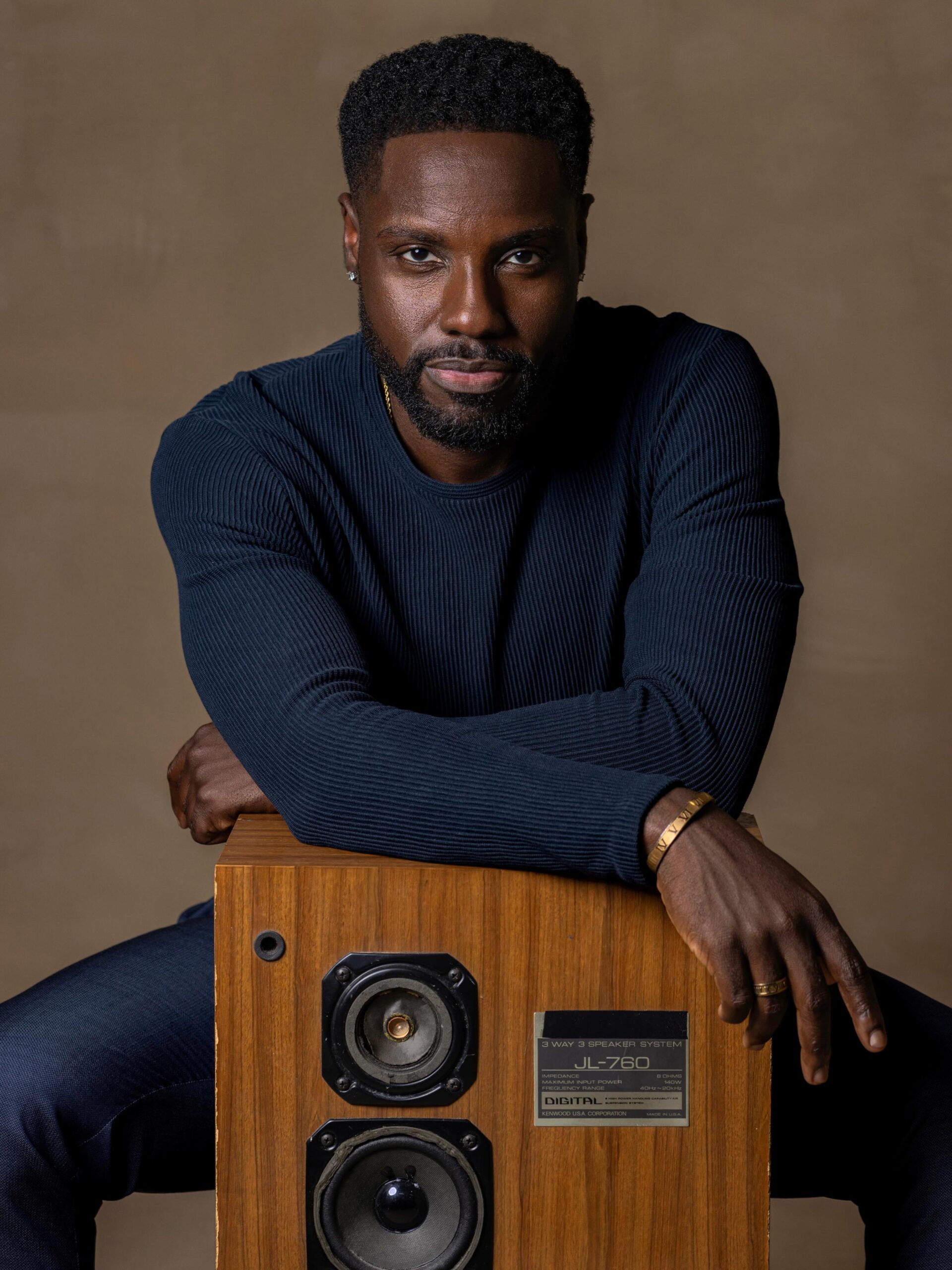
Our conversation moves from the chaos of moving to his many acting roles, which include The Hunger Games, Terminator Genisys and Shades of Blue, and then lands on his absolute love for science fiction. “I love Star Wars. This is exactly the type of stuff that I want to be doing—hard science fiction, only in the vein of the Christopher Nolans and the Denis Villeneuves of the world.”
His love for science fiction makes him an almost perfect fit for Dark Matter, the critically acclaimed Apple TV+ series adapted from Blake Crouch’s novel of the same name. The book and series tackle questions of alternate realities, ambition, regret and the pressures of creating a perfect life. It is an ambitious science-fiction story, but also an especially fitting role for Okeniyi, who is clearly living in his element.
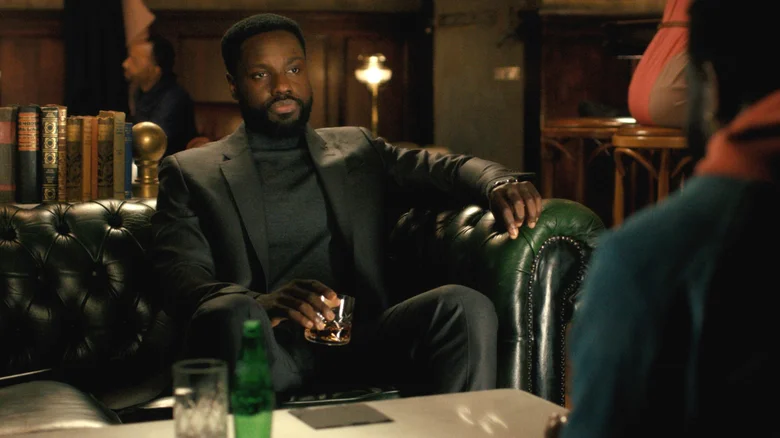
Image Credit: Apple TV
In the series, Okeniyi plays Leighton Vance. But in Dark Matter, that means playing multiple versions of the same character across different realities. The result is a technically demanding yet deeply rewarding acting process—one that requires body doubles, meticulous attention to detail and the ability to move between entirely different versions of the same person.
During our conversation, we liken the process to The Parent Trap, the classic Lindsay Lohan film in which she convincingly plays a pair of twins. Okeniyi, it turns out, has become equally convincing at playing characters who can look like the same person but exist in entirely different worlds.
Beyond acting, Okeniyi is also a co-founder of PVO Global, a lifestyle and community platform focused on creating safe spaces, promoting mental health awareness and giving back to the community. “I work with RED. RED is an organisation centred around eradicating AIDS and malaria from the world. We work with Cool Kids in New York, which is an urban outreach programme. We worked with Africa Health Now in 2017 and 2018. Their whole thing was to mitigate the infant mortality rate in Nigeria and Ghana,” Okeniyi tells Amplify Africa.
“We’ve worked with Distant Relatives in D.C., helping their customers who are homeless and preparing them for job interviews and things like that. So there’s also a charitable component to PVO. PVO is a lifestyle brand, but it’s also about giving back to the community, creating safe spaces for marginalised people and Black folks, and bridging that gap.”
Here, Dayo Okeniyi and I spend a Saturday talking about his expansive filmography, his work in the new season of Dark Matter, the possibilities and dangers of limitless technology, and the importance of creating spaces where Black people can simply exist, connect and feel at home.
This interview has been edited and condensed for clarity and flow.
AMPLIFY AFRICA: Dark Matter is a very high-science show. Are you a science-y type of person?
DAYO OKENIYI: I love Star Wars. This is exactly the type of stuff that I want to be doing—hard science fiction, only in the vein of the Christopher Nolans and the Denis Villeneuves of the world.
A.A: Because Leighton creates the box in this universe, was there any part of that storyline that you borrowed from what’s happening with AI and technology in the real world?
DAYO OKENIYI: The truth is, a real-world analogy for the box—I think when fans of the show watch the show, not to give too much away, a lot of the conversations we have around the box on the show are conversations you can have about AI.
This technology is too powerful. No one can actually be able to wield this much power. I mean, AI has completely disrupted people’s livelihoods, their jobs. It’s replaced people, and the box can do the same thing.
If you could go to any world and steal the best ideas, the greatest ideas, and bring them to your world, then Steve Jobs never discovers Apple, you know what I’m saying? Somebody else gets the credit for that. And there’s an unethical thing there as well.
A.A: As an artist who puts himself out there, do you think we’re moving towards a perfect world where we no longer have that feeling of having made it ourselves?
DAYO OKENIYI: You just made a connection that I’ve never thought about in terms of AI and The Box.
If you think about it, you go into ChatGPT or Claude or whatever the case may be, and you put in a prompt, right? You say, “Hey, make me a poster of me singing with Lady Gaga.” So it’s so funny that you say that.
I think what it is is, no matter how much machine learning AI can do, it’ll never have the attention to detail that an artist: a human being, an author, a musician, can have. That specificity to creativity is something that it will just never have.
And I think, in a way, I’m a little bit happier that on our show, the box is the box. It goes off your mind. It’s not a god. It’s not an entity. It doesn’t have a personality. So the more crystal-clear you can imagine your perfect world, the box will get as close to that as possible.
A.A: Who is your favourite Leighton?
DAYO OKENIYI: I can’t say it quite yet because it’s a spoiler. When we get to Episodes 8, 9 and 10, Leighton does some very interesting things, so I can’t quite say yet.
But I will say that—oh man, it’s so tough. I hate it. I can’t. I want to answer you truthfully, but I know to answer you truthfully, I’ll spoil it for you.
A.A: The show also talks about trying to edit your life, often because we regret something. Was there any one decision in your career or life where you wondered what might have happened if you’d chosen differently? If you had the box, what would you want to do?
DAYO OKENIYI: Yeah.
Get Out. Jordan Peele was interested in me for Get Out at the time, or at least interested in me auditioning for it. We got [Daniel Kaluuya], who was the best person for that part, and he got the part.
Moonlight. I remember I had a Skype call with Barry Jenkins about Moonlight. And again, I was on a TV show. I was under contract. I couldn’t even audition for it if I wanted to.
Star Wars. I flew to London to test for Star Wars. Ultimately, I got Terminator instead.
Then there was a whole thing where they were like, “Oh, you’re already in Terminator. We’re not going to go forward with the screen test for Star Wars.”
So they wanted me to pass on Terminator without even knowing fully that I was going to get Star Wars. And I was just like, “Hey, that’s a step too much courage that I didn’t quite have at the time.”
And of course, you feel regret around these things, man. These are massive projects that change people’s careers forever. You wonder, “Oh, well, what if I stayed? What if I didn’t do that?”
But, man, I think at the end of the day, everything happens for a reason, good and bad. I think what happened happened and could not have happened any other way.
You just have to make peace and be grateful for the life that you have. I’m incredibly fortunate. And you know, just keep going and keep making the best decision you can.
A.A: Nigerians have this thing where we’re very proud of our people wherever we go. Do you feel like you’ve had that support from Nigerians?
DAYO OKENIYI: I think so. You know, it’s funny. When I think about Nigerians, my mind is always centred around how I can make Nigeria proud of me, rather than what Nigeria can do for me. I mean, we have a love-hate relationship with Nigeria in the sense that the things we’re incredibly proud of, we’re incredibly proud of, and the things that we’re critical of our country about, we’re very critical about.
I would say most Nigerians would agree, we grew up constantly thinking about what we could do for Nigeria, not necessarily what Nigeria could do for us.
And so going to Hollywood, I was all about, “Ah, I can’t make Nigeria look bad.” Nigeria already has a bad reputation here and there about other things. There’s this innate thing we have in us to want to change the perspective people have on Nigeria and give Nigeria a good name. So my career is literally me trying to make Nigerians proud of me.