
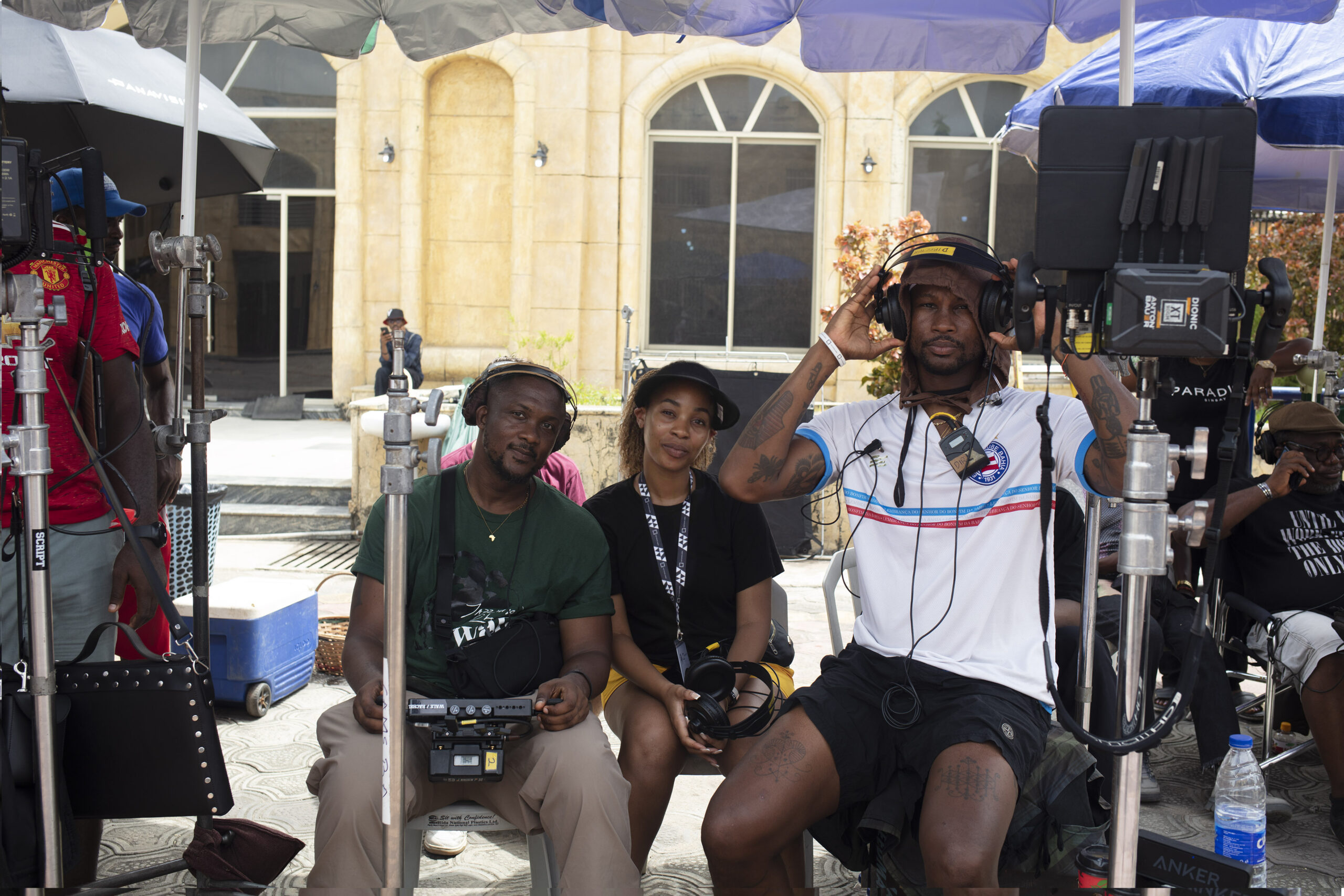
Behind The Scenes of My Father’s Shadow // Photo Courtesy of Akinola Davies Jr
Few films released in the past year have endured quite like My Father’s Shadow, the feature directorial debut of Akinola Davies Jr., who co-wrote the screenplay with his brother Wale Davies. Set against the backdrop of Nigeria’s 1993 presidential elections, following years of military rule, the film is anchored less in political spectacle and more in the intimacy of family.
For Davies Jr., that intimacy is shaped by perspective. Telling the story through children, he explains, allows for “a fresh palette of curiosity,” free from the pre-judgments and social conditioning of adulthood, opening the film up to moments of softness, wonder, and even magic. It’s a lens that also deepens the film’s emotional core, as it explores how memory moves through grief, and how absence, particularly Black paternal absence, can be re-examined beyond stereotype.
Visually and structurally, the film leans into what Davies Jr. describes as the inherent “style, pace, and rhythm” of African cinema. Drawing from oral traditions and the groundwork laid by earlier African filmmakers, My Father’s Shadow builds a textured, almost tactile world that uses detail and atmosphere to trigger memory and create an emotional register with audiences. As a period piece, that attention to texture becomes even more critical, grounding the film in both history and feeling.
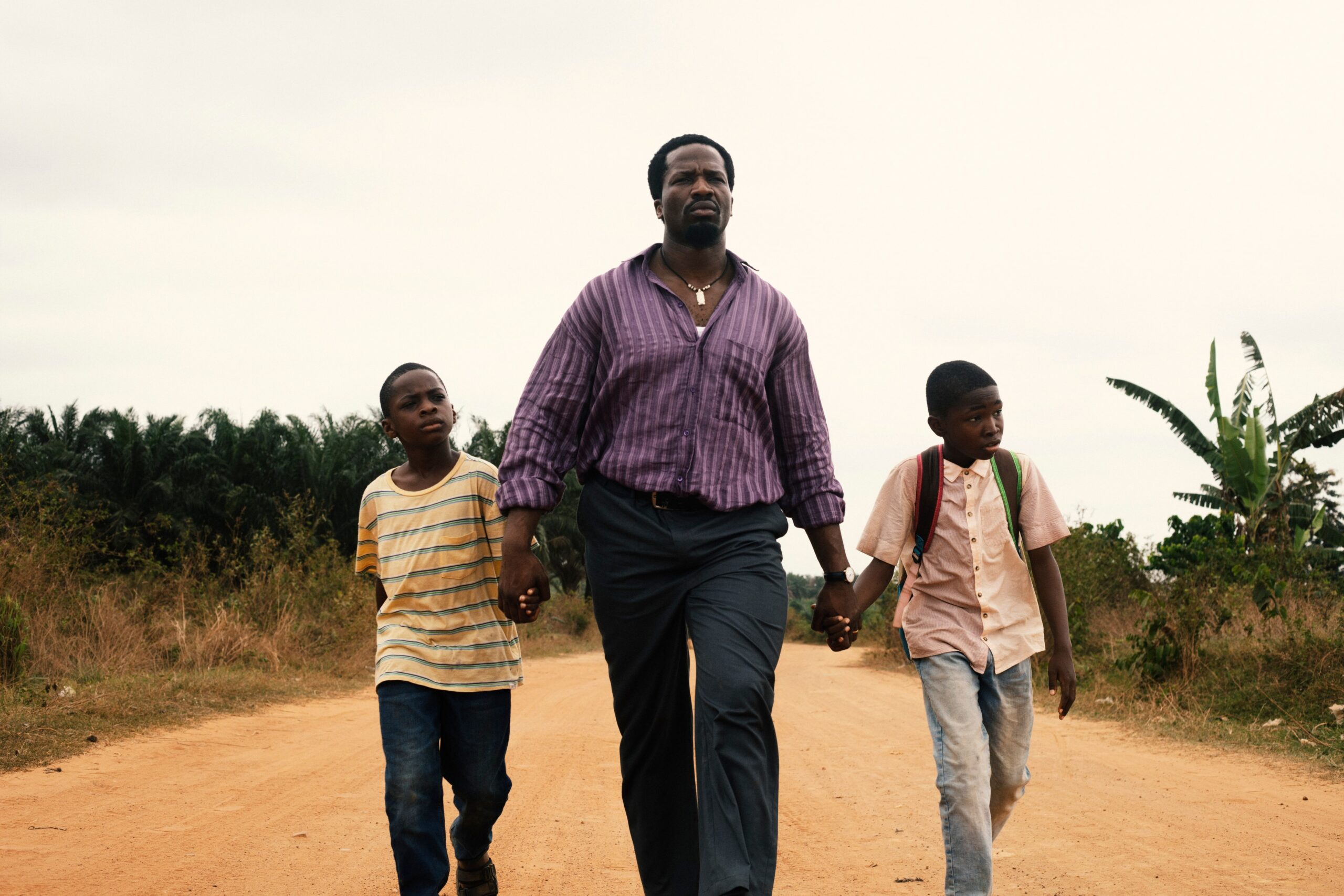
The result is a film that feels at once deeply personal and collectively resonant. While rooted in the Davies brothers’ own family history, the film resists direct autobiography. Instead, it borrows from lived experiences, memory, and research to construct something more expansive which turned into a story that, as Davies Jr. puts it, now belongs to the public, open to interpretation rather than prescription.
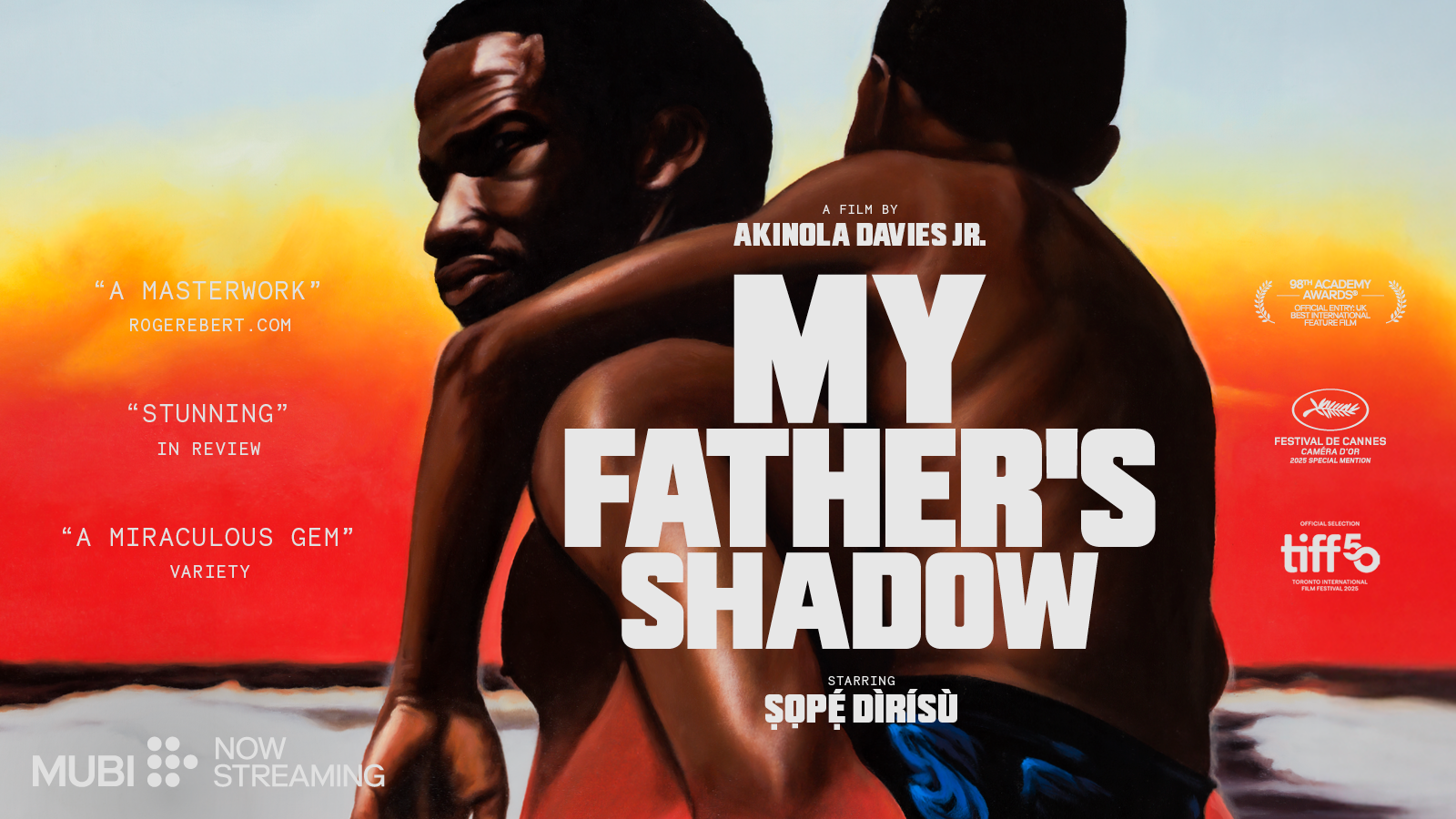
Critics and audiences alike have responded in kind with the praise. Following its world premiere at the Un Certain Regard section of the 2025 Cannes Film Festival where it became the first Nigerian film selected for the festival’s Official Selection, with the film ultimately earning a Special Mention for the Caméra d’Or. Its awards run continued with a BAFTA Award for Outstanding Debut, a British Independent Film Award, and two Gotham Independent Film Awards, alongside its selection as the United Kingdom’s entry for Best International Feature Film at the 98th Academy Awards.
As My Father’s Shadow reaches new audiences through its MUBI release, Davies Jr. remains focused less on legacy and more on responsibility: to continue telling stories that are urgent, rooted, and in service to community.
To ensure more people experience what is fast becoming a modern Nigerian classic, Amplify Africa is partnering with MUBI to present My Father’s Shadow on the platform, where it will be available to watch for free over the next 30 days.
Start your free trial here
Ahead of its release, we spoke to Akinola Davies Jr. about the film’s visual language, its thematic core, and the questions that continue to shape his work.
What story were you hoping to tell through these elements, beyond the dialogue? How did the textures of the film help shape the emotional experience for the audience?
First and foremost, it’s important to situate the fact that African cinema has a style, a pace, and a rhythm. As African filmmakers, we should double down on our knowledge of storytelling and the way we want to tell our stories. The systems and infrastructures created by other African filmmakers, and the way oral traditions have always functioned, permit a very cerebral texture. That allows you to lean into world-building and ultimately creates an emotional register with audiences.
Our film is also a period piece, so it’s important to use texture as an opportunity to trigger memory and reinforce the thematics of the film.
There’s also something deeply tender about experiencing the story through a child’s perspective. Why did that feel like the right entry point for this story? And more broadly, what does a child’s perspective allow you to explore that an adult lens might miss?
Telling the story from a child’s perspective is generous, because children approach the world in a neutral way. They don’t have the pre-judgments, stereotypes, or socialization we have as adults. It creates a fresh palette of curiosity and lends itself well to magic.
What emotional truth were you most intentional about capturing in this story? And what does the title My Father’s Shadow mean to you personally?
For us, we were trying to explore how memory persists within grief, or the lack of that persistence. We’re examining the nuances of absence, moving away from stereotypical representations of Black male absence. My Father’s Shadow is a name coined by my brother. It takes on different meanings, but ultimately I’m named after my father. It’s a name I’ve had to step away from because of the weight it carried through my youth, adolescence, and adulthood. It’s really about a shadow being cast over light, and the ability to step out of it.
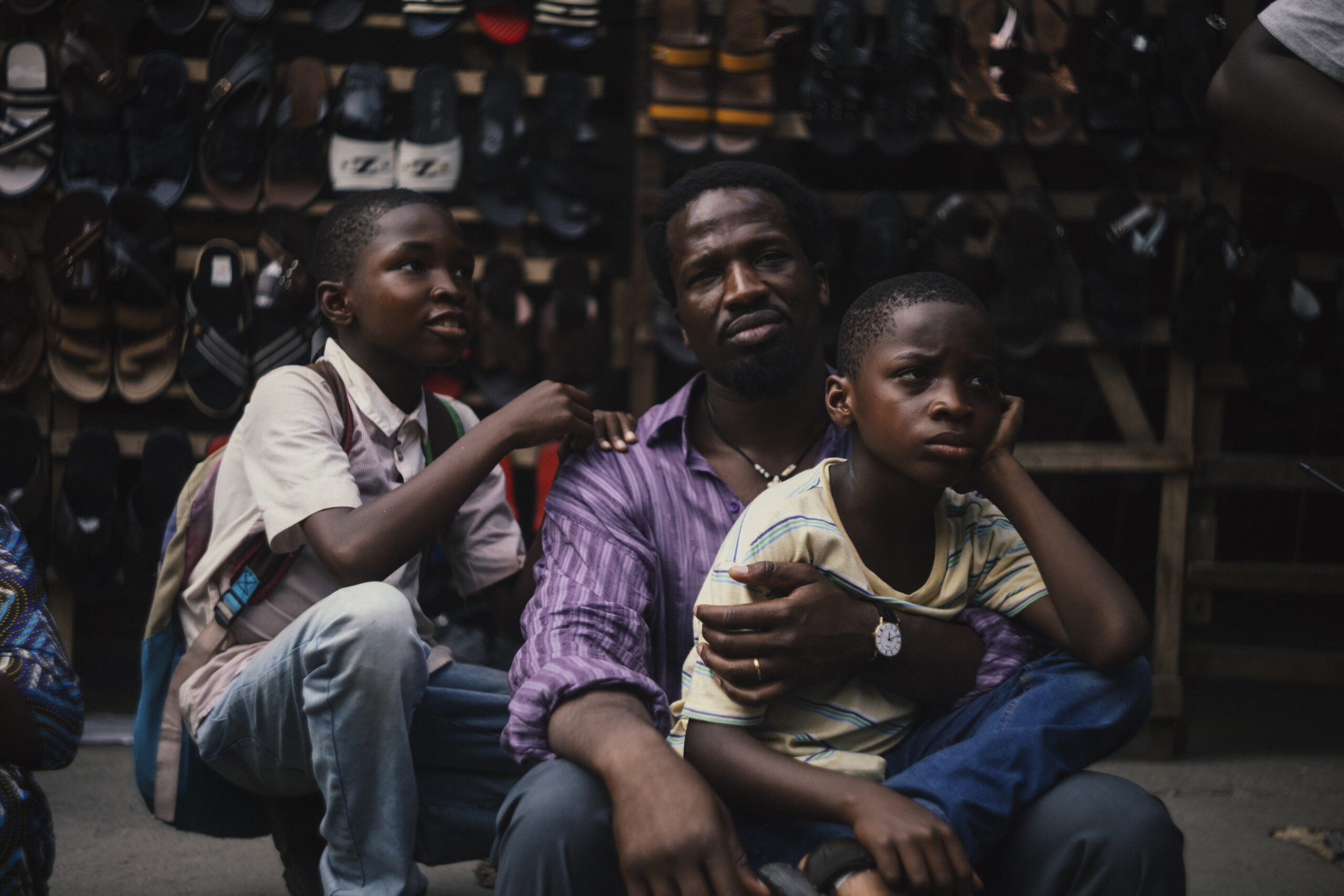
Thinking about the characters and the world of the film, the story feels deeply personal. In what ways does the family depicted in the film parallel or differ from your own?
The film is based on our family and many stories, so it’s hard to separate. The differences are clear: we have two other siblings who aren’t in the story, and we come from a middle-class family, while the film’s family is more working class. We also never got to spend a day with our father, whereas the boys do. A lot of it is borrowed from real people, present-day characters, memories, and research. It’s very similar, and that separation is hard to identify.
In what ways do you hope audiences see themselves reflected in this story? For those navigating complicated father-child relationships, what do you hope they take away from watching this film?
I’m not didactic about what I want audiences to see. However people see themselves in the film, I’m content with that. The film now belongs to the public. I’m not interested in prescribing how people should feel. What I will say is that father–child relationships are complex and nuanced. Many of our preconceived notions are stereotypical and colonial. We need to move past that and understand the realities of the older generation and the traumas they lived through without always having the tools to articulate them and have more grace and empathy, because our generation is very different from theirs.
Why was it important for you to tell this story, and why now?
As Black filmmakers, we often assume we may only get one opportunity to make a film. With that, we wanted to do something urgent, for ourselves, our families, and our country. The historical aspects have always been present, but not always packaged as entertainment. It’s important for us to be of service to our community through the stories we tell.
What does releasing My Father’s Shadow mean to you both emotionally and creatively? What younger version of yourself needed this film to exist?
The fact that the work exists is special because it belongs to a larger community beyond myself. I’ve had many questions to explore about fatherhood, masculinity and we’re examining those in My Father’s Shadow. We’re not done with that exploration, but we’ve always leaned into our own stories. That’s what got us here, and that’s what we want to continue doing. We want to prioritize our stories and encourage people across the diaspora and the continent to do the same.
Thinking beyond this project, what do you feel is your purpose as a storyteller?
My work is for people who exist in the middle, for people who don’t see themselves as exceptional or entirely defined by trauma. It’s about reminding people who they are. It’s about being Pan-African, telling our stories and histories, and being of service to community.
As the film continues to resonate and build momentum, how is this moment shaping your career in real time? What do the next few years have in store for you?
I don’t think it’s for me to decide what comes next. I want to continue creating in the way I always have: working with my brother and being a resource for my community. Those things existed before the film. I don’t think meritocracy necessarily exists for Black filmmakers, whether in the Global North or, at times, the Global South. While I’m grateful for the reception, I need to get back to work.
Nigeria and countries across the continent have large reputations, and many of those are shaped by colonial narratives. We need to interrogate where our understanding of ourselves, our spirituality, our histories, our identities, come from. Much of it has been dictated by colonization. As a storyteller and a Nigerian, it’s important to reclaim that narrative and show the fullness of our humanity.
If you could say one thing directly to the audience before they press play, what would it be?
I would advocate for audiences to see this film as a bridge to a Nigeria I grew up in: imperfect, but something I’m proud of. It was made by an incredible community of filmmakers, without whom none of this would be possible.
Start your free trial here
All photos courtesy of Akinola Davies JR