
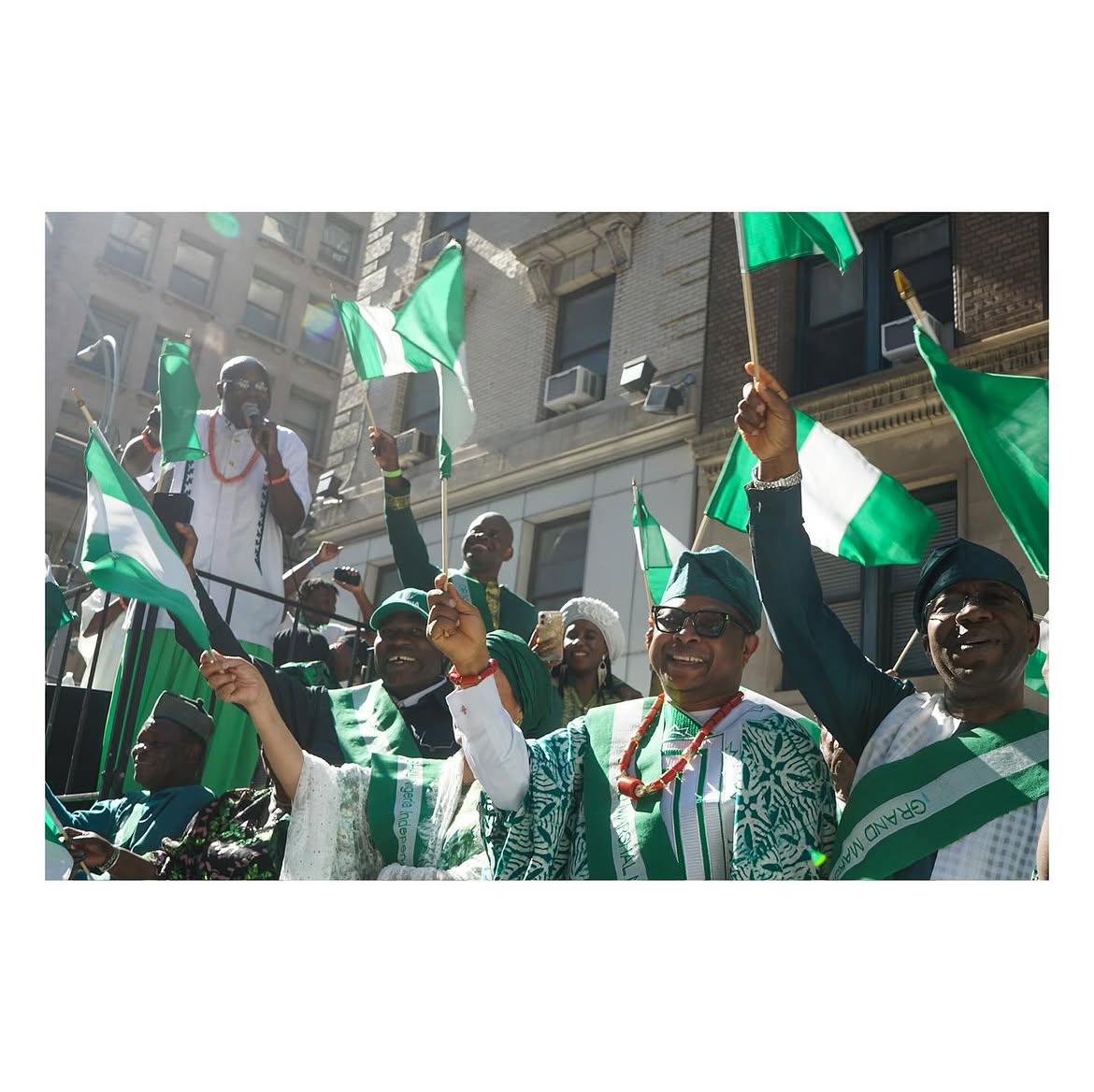
Washington, DC has proclaimed October 2026 as Nigerian American Heritage Month, recognizing the history, culture and contributions of Nigerian Americans in the District and across the United States.
The District also proclaimed October 1, 2026, as Nigeria Day in Washington, DC, with the announcements coming as Nigeria marked its 66th Independence Day.
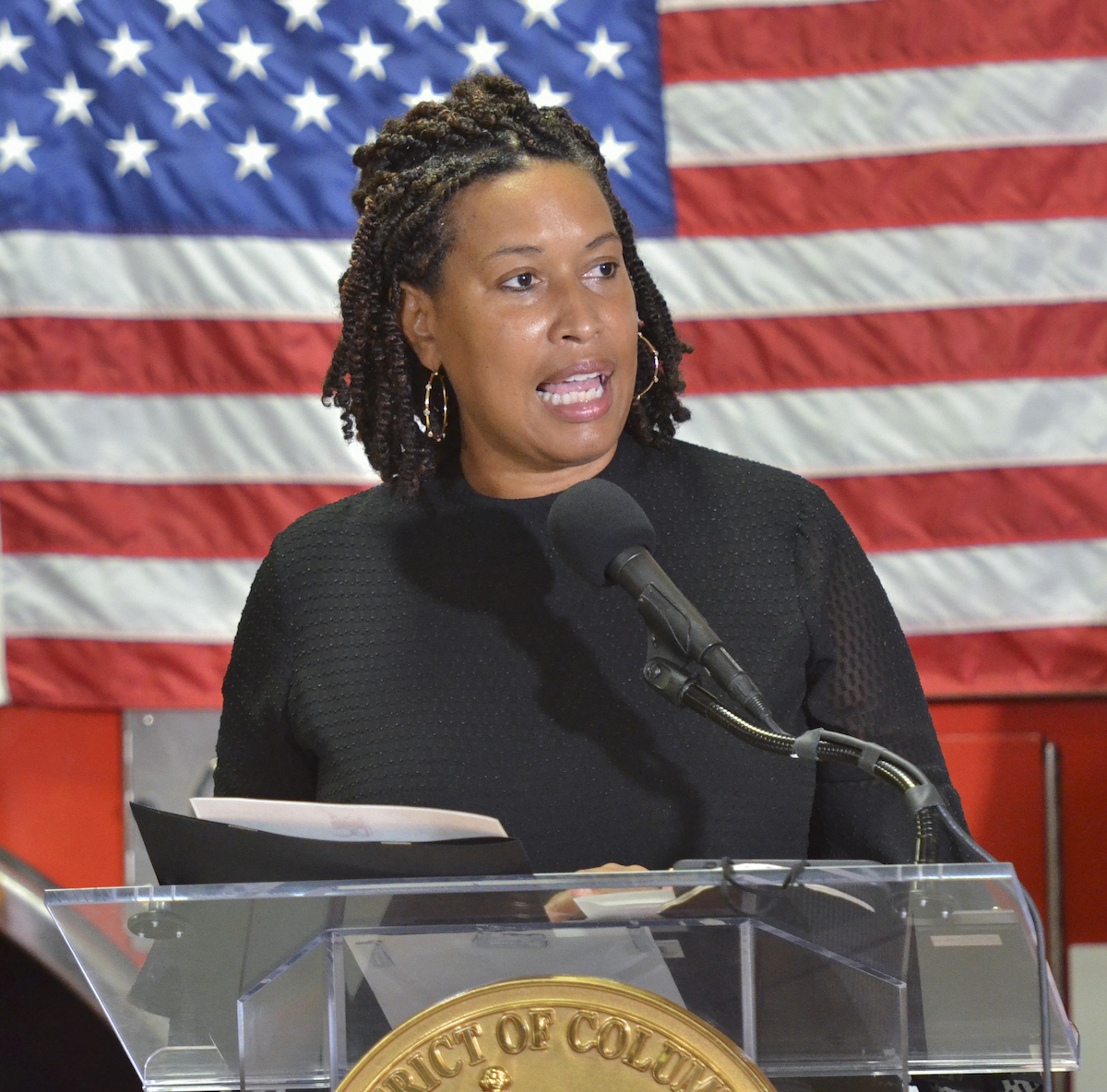
Secretary of the District of Columbia Kimberly A. Bassett presented the proclamation on behalf of Mayor Muriel Bowser during Nigeria’s Independence Day dinner at the Nigerian Embassy in Washington, DC.
“Nigeria holds a very special place in our city. This is why we are also celebrating the incredible contributions of the Nigerian community here in DC. Nigerians have built businesses, served our neighbourhoods, and enriched our city through their culture and traditions,” Bassett said.
The proclamation recognizes the contributions of the District’s Nigerian community, including its more than 4,000 Nigerian-born residents. It also acknowledges the role of Nigerian Americans as civic leaders, entrepreneurs and innovators across fields including art, music, medicine, science and technology.
“WHEREAS, the District of Columbia is tremendously enriched by the contributions of its more than 4,000 Nigerian-born residents,” the proclamation states, while also recognizing the leadership of Nigeria’s Ambassador to the United States, Lateef Kayode Kolawole Are.
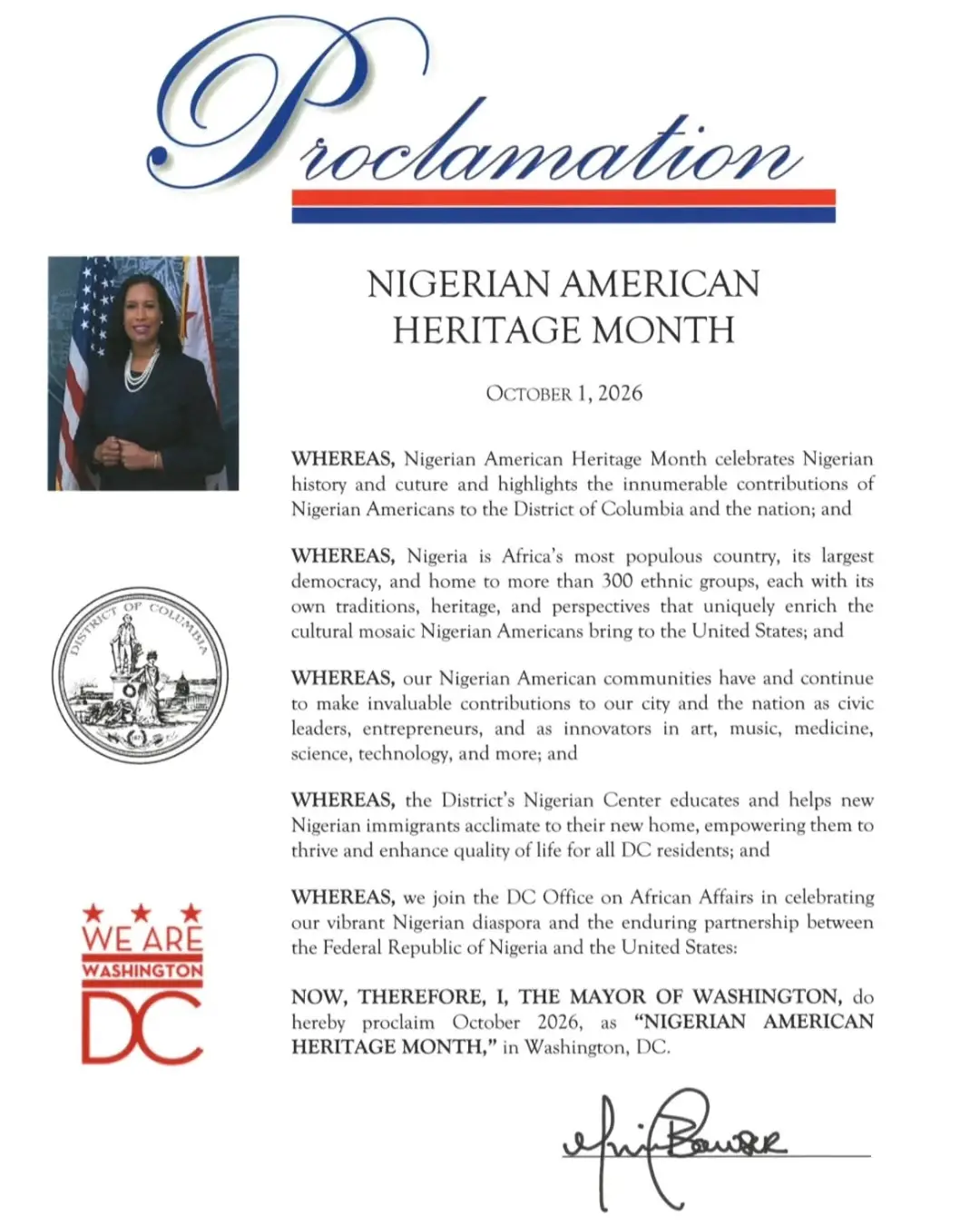
The proclamation describes Nigeria as “Africa’s most populous country, its largest democracy, and home to more than 300 ethnic groups.”
It also recognizes the work of the Nigerian Center, an organization supporting Nigerian immigrants as they settle in Washington, DC and build communities in the city.
Bassett praised the Nigerian Embassy and community organizations for helping strengthen cultural ties between Nigerians and Washingtonians. She also highlighted the embassy’s engagement with local communities and its work exposing residents to Nigerian culture.