For decades, global discussions about Africa were largely shaped by outsiders. Due to this, when the continent was depicted in media, it was through specific and narrow lenses of crisis, poverty, or conflict, and for ‘positive representation’ it often erred on the side of exoticism. In recent times, a shift has happened, and it is no small shift. Modern African filmmakers, actors, writers, producers, and showrunners are no longer waiting to be interpreted. They are telling their own stories, and the world is actively listening.
From the rise of Nollywood to the global success of streaming-era African originals, African film and television talent are increasingly shaping what global audiences watch, discuss, meme, stream, and emotionally connect to. More importantly, they are reshaping how Africa itself is seen and understood across the world. At the centre of this cultural shift is a simple but powerful reality: stories travel. And when African stories travel, they carry entire worlds with them.
Africa Is No Longer A “Niche” Cultural Export
There was a time when African cinema mostly existed domestically in physical media and was looked down on, while internationally it existed almost entirely within festival circuits and the large African diasporic community. International recognition was mostly non-existent, with what few recognition African storytelling got were limited to arthouse acclaim or documentaries aimed at Western audiences or helmed by Western talent. Today, African storytelling, by Africans and for Africans, exists firmly within mainstream global entertainment.
A Nigerian series trends on Netflix in Brazil. A South African thriller sparks conversation in London. A Kenyan sci-fi film gains cult status online. African actors headline global franchises. African aesthetics influence cinematography, fashion, music supervision, and storytelling structures across the entertainment industry. It is globally looked at as its own respected genre that has its specific striking visual language. A mark of true emancipation from Western influence.
This evolution has happened alongside the streaming and social media revolution. Platforms like Facebook first helped create and establish a diasporic audience for African storytelling, even fueling its distribution, and creating community conversation hubs while Instagram helped legitimise African storytelling thanks to meme culture. In time, platforms like Netflix, Amazon Prime Video, and Showmax recognized what African audiences already knew: there is enormous demand for African stories, both on the continent and beyond it.
While technology has been instrumental, it is not the reason these stories resonate. The deeper reason is emotional specificity.
The best African films and television shows do not succeed because they attempt to imitate Hollywood. They succeed because they feel deeply rooted in place, language, tension, humour, and lived experience. Ironically, the more local these stories become, the more universal they feel. Tobi Bakre’s star turn in Netflix’s Rattlesnake: The Ahanna Story (2020), which was a remake of the classic Nollywood movie the 1995 Nigerian classic action thriller film Rattlesnake is as specifically African as they come as is his work in Prime’s Gang of Lagos. And that is what helped drive their success and emotional depth.
Nollywood’s Evolution Changed Everything
It is impossible to discuss Africa’s storytelling rise without acknowledging the massive influence of Nollywood. For years, Nollywood was dismissed internationally because of its production quality. Yet while critics underestimated it, Nollywood quietly built one of the largest film industries in the world first by volume. Eventually, Nollywood mastered something Hollywood increasingly struggles with: cultural intimacy.
Nollywood films understood audience behavior long before algorithms did. They understood melodrama, family politics, spirituality, aspiration, romance, migration, and social pressure because these were realities audiences recognised instantly. A rewatch of classic Nollywood titles: Living in Bondage, Nneka the Pretty Serpent, Blackberry Babes, Aki na Ukwa, would show you how adeptly they captured the exact feeling of the time, culture and people they are a part of. Films and series from Nigeria are not and have never been just local entertainment products. They are cultural texts that help global audiences understand contemporary African urban life, and now, a new generation of Nigerian filmmakers is expanding that legacy. Directors are experimenting with genre, scale, cinematography, and narrative ambition while maintaining the emotional accessibility that made Nollywood powerful in the first place.
This has not always been how they were understood, however. In the 90s and even 2000s, these movies were looked down on for being hyperbolic and larger than life. Then Instagram changed the game. When people took to resharing stills from these Nollywood classics, it gave us all a chance to appreciate them and notice how their visual language: chaotic and colorful were actually the exact way to capture Nigerian life. And with that, we were all able to truly appreciate Nollywood for what it was, and that retrospective appreciation was what made it possible for Nollywood’s true evolution to ring true.
African Talent Is Shaping Global Pop Culture
The influence of African storytelling now stretches far beyond African productions themselves.
Actors like Lupita Nyong’o, John Boyega, Thuso Mbedu, and Daniel Kaluuya have become globally recognizable not simply because they are talented performers, but because they represent a broader shift in who gets to exist at the center of global storytelling. Meanwhile, actors like Tobi Bakre, Osas Ighodaro, Linda Mtoba, Nomzamo Mbatha, and Kehinde Bankole across the continent are redefining what African stories can look like onscreen. Historical epics, queer dramas, speculative fiction, psychological thrillers, luxury reality television, and experimental documentaries are all emerging from African creative ecosystems.
This matters because culture shapes imagination. And imagination shapes politics, business, tourism, fashion, and identity. For many people around the world, their first meaningful emotional connection to an African city, accent, or worldview may now come through television and film rather than news coverage. That changes perception in ways that statistics and diplomacy often cannot.
The Diaspora Is Creating A New Cultural Bridge
One of the most fascinating developments in modern African storytelling is the relationship between the continent and its diaspora. African creatives living in London, Toronto, Atlanta, Paris, and Johannesburg are increasingly collaborating across borders, creating stories that reflect hybrid identities and transnational experiences. Themes like migration, identity conflict, queerness, family obligation, religion, and cultural reinvention appear repeatedly because they speak to millions navigating multiple worlds simultaneously.
This has created a new kind of global African storytelling ecosystem: one where a Nigerian creator can influence Hollywood, a Ghanaian-British actor can headline an international franchise, and an African series can generate discourse across TikTok communities worldwide. In many ways, African storytelling is becoming one of the clearest examples of globalization from below: culture moving outward not through institutions alone, but through audiences, fandoms, creators, and digital communities. As a result, one of the most important things African film and television talent are doing right now is expanding the world’s imagination of what Africa is.
It is important to note that not every story needs to carry the burden of representation. African creators deserve the freedom to make messy romances, absurd comedies, elite dramas, horror films, and experimental art simply because those stories deserve to exist. Yet collectively, these works are still doing something politically significant. They are making Africa more visible in its complexity.
The Made By Africa, loved By The world 2026 Campaign
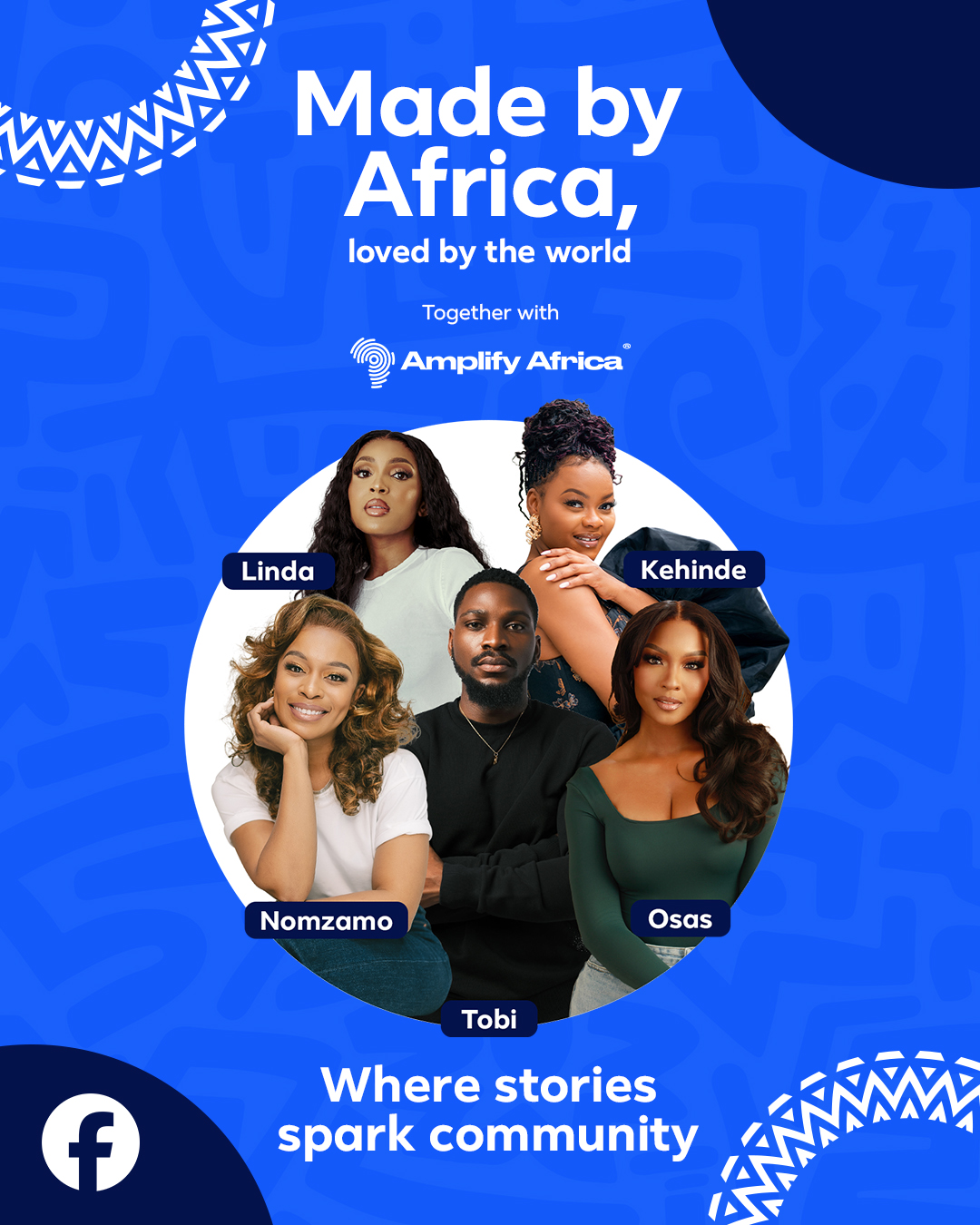
For the sixth edition of its pan-African campaign, Made by Africa, loved by the world: Where stories spark community, Facebook is turning its attention to one of the continent’s most powerful exports: storytelling with a focus on African cinema and the actors, producers and storytellers pushing it onto the global stage.
The campaign spotlights some of the most exciting names shaping film culture across Nigeria and South Africa right now. From Nollywood stars like Kehinde Bankole, Osas Ighodaro and Tobi Bakre to South African powerhouses Nomzamo Mbatha and Linda Mtoba, the series celebrates the talent redefining how African stories travel across the world.
At the center of the campaign is a five-part vodcast series hosted by leading African podcasts I Said What I Said (Nigeria) and Because We Said So (South Africa) featuring conversations with each star, exploring storytelling, identity, community and the impact African film continues to have far beyond the continent. Vodcast snippets will be available on the Meta Africa Facebook page, with full episodes available on the podcast channels.
Amplify Africa is a proud media partner of the Facebook 2026 ‘Made by Africa, loved by the world’ campaign.