

In Timbuktu, a historic city on the edge of the Sahara Desert in northern Mali, families have spent generations preserving manuscripts that document centuries of scholarship. Kept in private homes, family libraries and research institutions, these texts offer a record of West African intellectual life that stretches far beyond the familiar stories of kings, empires and colonial encounters. Some discuss Islamic law and theology. Others explore mathematics, astronomy, medicine, grammar, poetry and trade. Together, they reveal a city whose history was shaped not only by merchants and rulers but also by scholars, students, scribes and the people who believed their knowledge was worth preserving.
For centuries, Timbuktu has held an almost mythical place in the global imagination, its name synonymous with an impossibly distant place. But long before it became shorthand for the ends of the earth, the Malian city was a major centre of commerce and learning, attracting scholars from across West Africa and beyond. Its libraries are among the most compelling evidence of that history. Their survival tells a story of what happens when a community understands that preserving its past also protects its future.
When Timbuktu Was A Centre of Learning
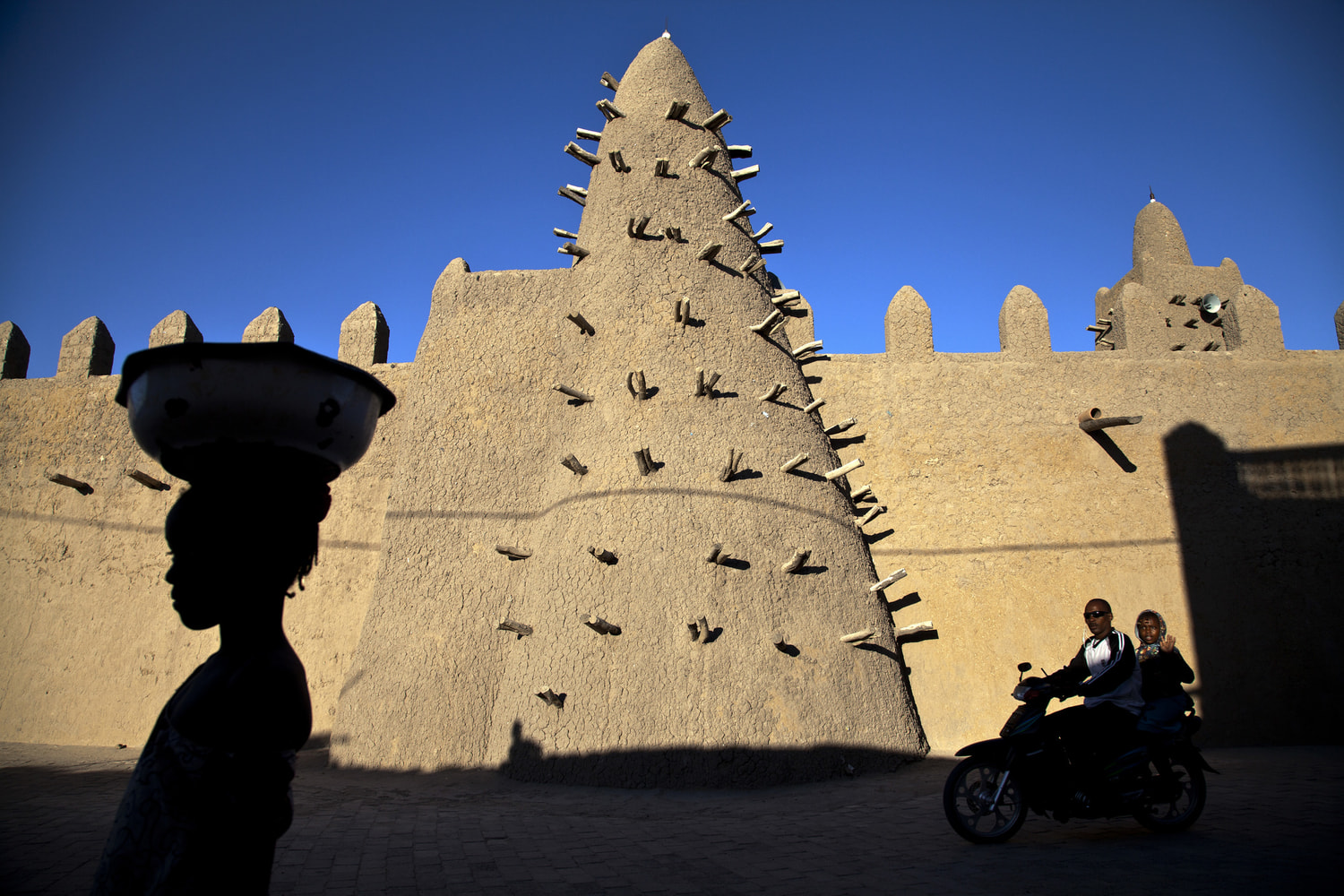
Image Credit: World History Encyclopedia
Timbuktu’s intellectual history is closely connected to its position along the trans-Saharan trade routes that linked West Africa with North Africa and the wider Islamic world. The movement of gold, salt, livestock and other goods helped establish the city as an important commercial centre. But trade brought more than wealth. It also facilitated the movement of books, religious ideas, scientific knowledge and scholars across regions.
During the 15th and 16th centuries, Timbuktu flourished as an intellectual and spiritual centre, particularly under the Songhai Empire. Its reputation was supported by institutions such as the Sankore Mosque and its associated tradition of Islamic learning. Students travelled to study with learned teachers, while scholars copied, acquired and exchanged manuscripts. Books were valuable enough to be traded, collected and passed between generations. The resulting literary culture was part of a wider network of African scholarship that connected communities across the Sahara and Sahel.
It is worth looking beyond the grand historical narrative, though. Timbuktu was not a single university or one enormous library. Its intellectual life developed through multiple institutions, individual scholars and family collections, each with its own history. The manuscripts that survive today reflect this diversity. Some are copies of established works from the wider Islamic world; others contain correspondence, local scholarship and records that help historians reconstruct the social and intellectual lives of West African communities.
As the Library of Congress explains in its exhibition on the city’s manuscript heritage, these documents offer insights into subjects spanning human activity, while demonstrating the depth of scholarship practised in West Africa during the medieval and early modern periods.
For historians, their value is not simply that they are old. It is that they provide evidence of African intellectual life from sources produced and preserved within the region itself. The families who became keepers of history
Perhaps the most striking thing about Timbuktu’s libraries is that many were never designed as public institutions. Instead, generations of families accumulated manuscripts, maintaining collections that could include religious texts, scholarly works, correspondence and documents inherited from earlier relatives. The books became part of family histories, passed down alongside the responsibility of protecting them.
Among the best-known collections is the Mamma Haidara Memorial Library, which preserves manuscripts associated with a longstanding tradition of scholarship and collecting in Timbuktu. The Fondo Kati collection is another important repository, while the Ahmed Baba Institute of Higher Learning and Islamic Research has played a central role in the institutional preservation and study of the city’s manuscripts.
These collections represent different strands of Timbuktu’s literary heritage. They also demonstrate why the city’s history cannot be reduced to a single archive or a handful of famous texts. For families responsible for the manuscripts, preservation has often meant protecting fragile documents from heat, dust, humidity, insects and the everyday risks of storing old paper and parchment. It has also meant deciding which materials to conserve, how to organise them and how to make them available to researchers without compromising their survival.
The work is painstaking, and it can be expensive. A manuscript may need specialist treatment before it can be handled safely, while identifying its author, date and subject may require considerable research.
The University of Cape Town’s Tombouctou Manuscripts Project documents the history of the city’s libraries and the efforts to conserve their collections. It also highlights the role of private custodians and organisations such as SAVAMA-DCI, a Malian organisation established to support the preservation and promotion of Islamic manuscript heritage.
The fact that these collections survived for so long is a testament to their custodians. Their continued survival, however, depends on more than the dedication of individual families. It requires funding, conservation expertise, documentation and institutions capable of supporting the work over time.
What These Manuscripts Tell Us
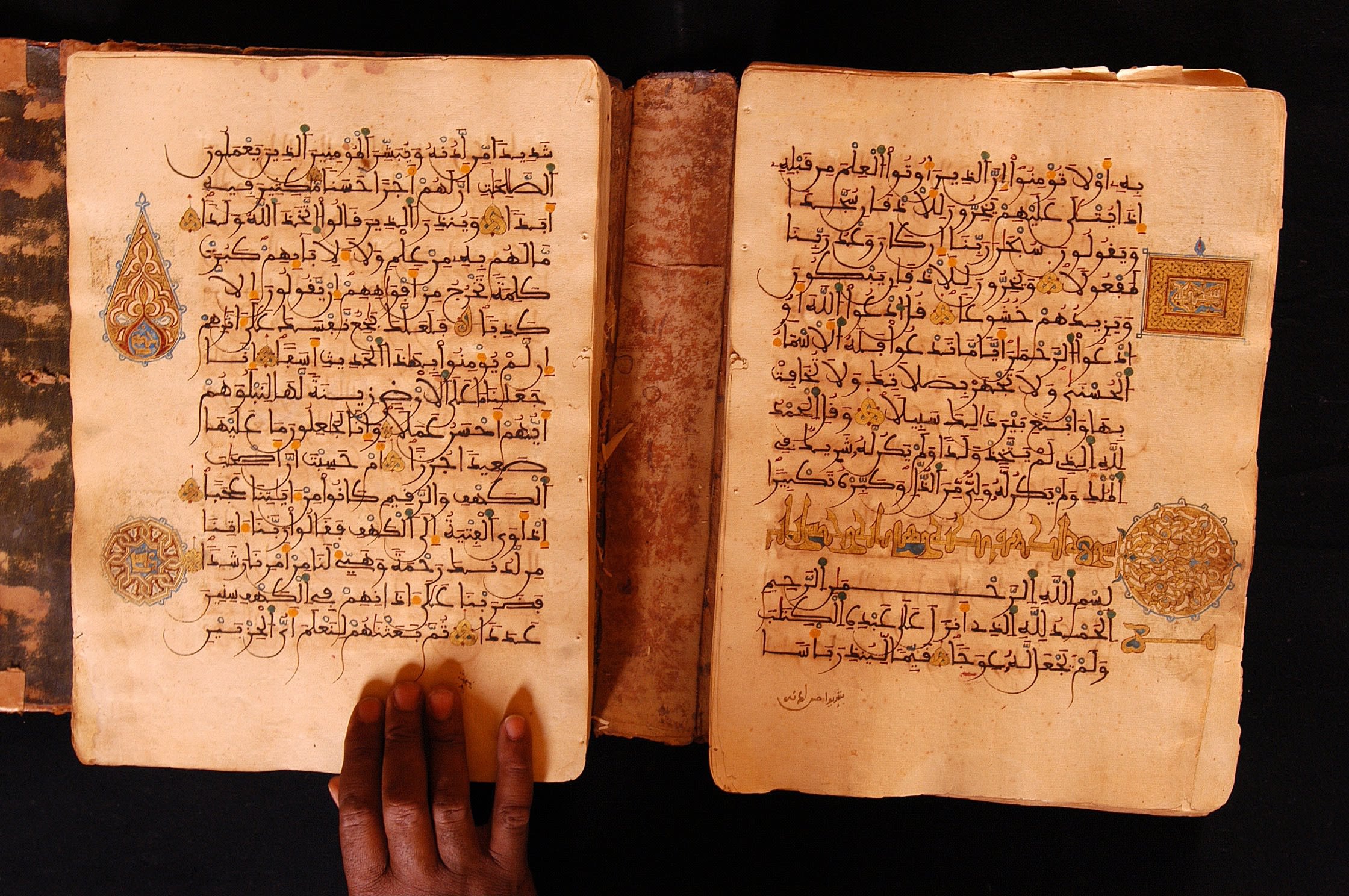
The popular image of Timbuktu’s manuscripts often centres on their age and their beauty: handwritten Arabic script, carefully decorated pages and documents that have travelled across centuries.
The manuscripts cover subjects including Islamic jurisprudence, theology, grammar, poetry, mathematics, astronomy and medicine. Other documents shed light on correspondence, education, commerce and the organisation of society. They show how scholars engaged with intellectual traditions that extended across Africa, the Middle East and other parts of the Islamic world. They also offer evidence of how knowledge circulated, how texts were copied and how communities adapted established ideas to their own circumstances.
A 2021 study published in the academic journal History in Africa, titled “What’s In the Manuscripts of Timbuktu? A Survey of the Contents of 31 Private Libraries,” examined manuscript inventories from Timbuktu’s private collections. The research discussed nearly 350,000 manuscripts inventoried across 35 libraries through a project coordinated by SAVAMA-DCI and its partners.
The study also offers an important corrective to romanticised accounts of Timbuktu’s past. The collections are not all direct remnants of the city’s 15th- and 16th-century intellectual peak, nor do they represent one uniform tradition. Their contents and historical depth vary, and understanding them requires careful cataloguing and comparison with other West African manuscript collections.
That complexity makes them more interesting, not less. Rather than serving as evidence for a simplified story about a lost golden age, the manuscripts allow researchers to investigate how scholarship developed over time, which texts people read, what knowledge they valued and how intellectual traditions changed.
They also challenge the assumption that African history before colonial rule must be reconstructed primarily through external accounts. Timbuktu’s manuscripts offer records written, copied, collected and preserved by African scholars and communities themselves.
Why Timbuktu Still Matters
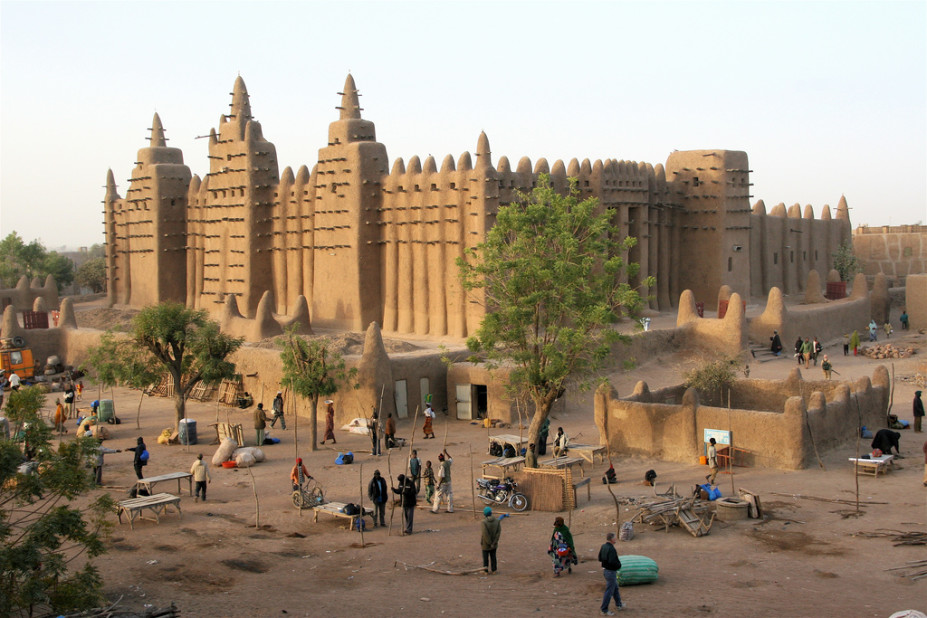
Timbuktu’s manuscript libraries matter because they preserve evidence of a history that cannot be told through monuments alone. The city’s mosques and historic buildings speak to its former importance as a centre of commerce, religion and learning. Its manuscripts offer another kind of evidence: the written record of ideas, debates, relationships and everyday concerns that animated that world.
They also remind us that African intellectual history was never a single story. Timbuktu was part of a wider landscape of scholarship, linked to other centres of learning across West Africa and the Islamic world. Its libraries are important not because they prove that one city possessed all knowledge, but because they reveal the depth and variety of the traditions that developed there.
For generations, families in Timbuktu understood the value of these records long before the rest of the world began paying them sustained attention. They kept the books, protected them and passed them on, often without the resources available to major public institutions.
Today, the task is to ensure that the manuscripts can continue to be preserved, studied and shared without separating them from the communities that safeguarded them. The story of Timbuktu is often told as a story of lost glory, a once-great centre of learning whose importance belongs to another age. But the survival of its manuscripts suggests a different way of looking at the city. Its history was never entirely lost. It was kept in family collections, carried through periods of upheaval and protected by people who understood what was at stake.
The books are still here. The work now is to make sure their stories can be read.