
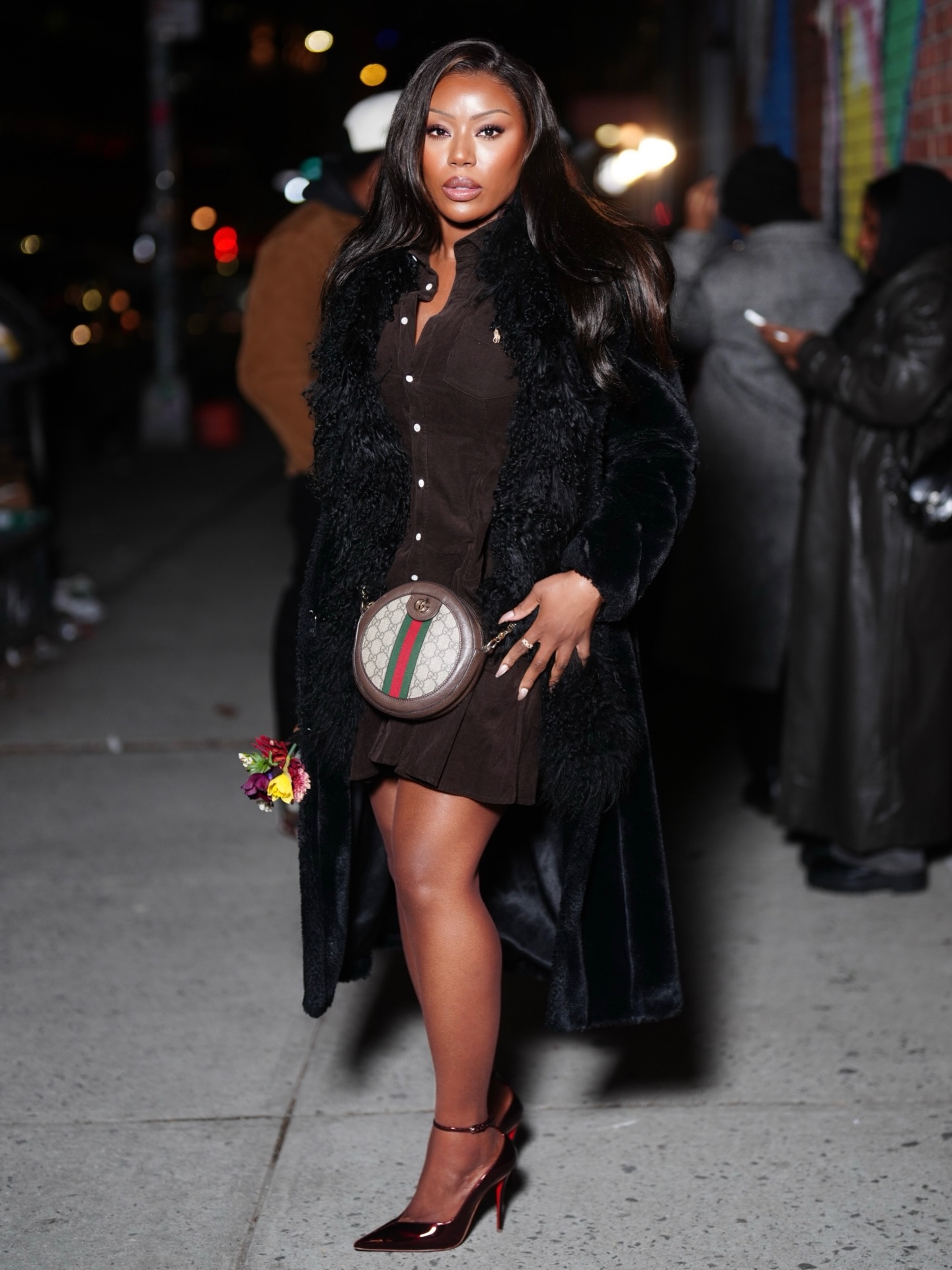
On a Thursday evening for me, but morning for her, I get on a call with Nigerian-American journalist Ivie Ani. She’s fresh off a monumental announcement as one of the three newest culture ambassadors for Martell, but our conversation begins much earlier at the start of her journey.
In conversations about what counts as Afrobeats, African music history, and the ways both have been documented and understood globally, Ani stands out as one of the early scribes who began mapping what would eventually become the global domination of Afrobeats throughout the 2010s and into the 2020s.
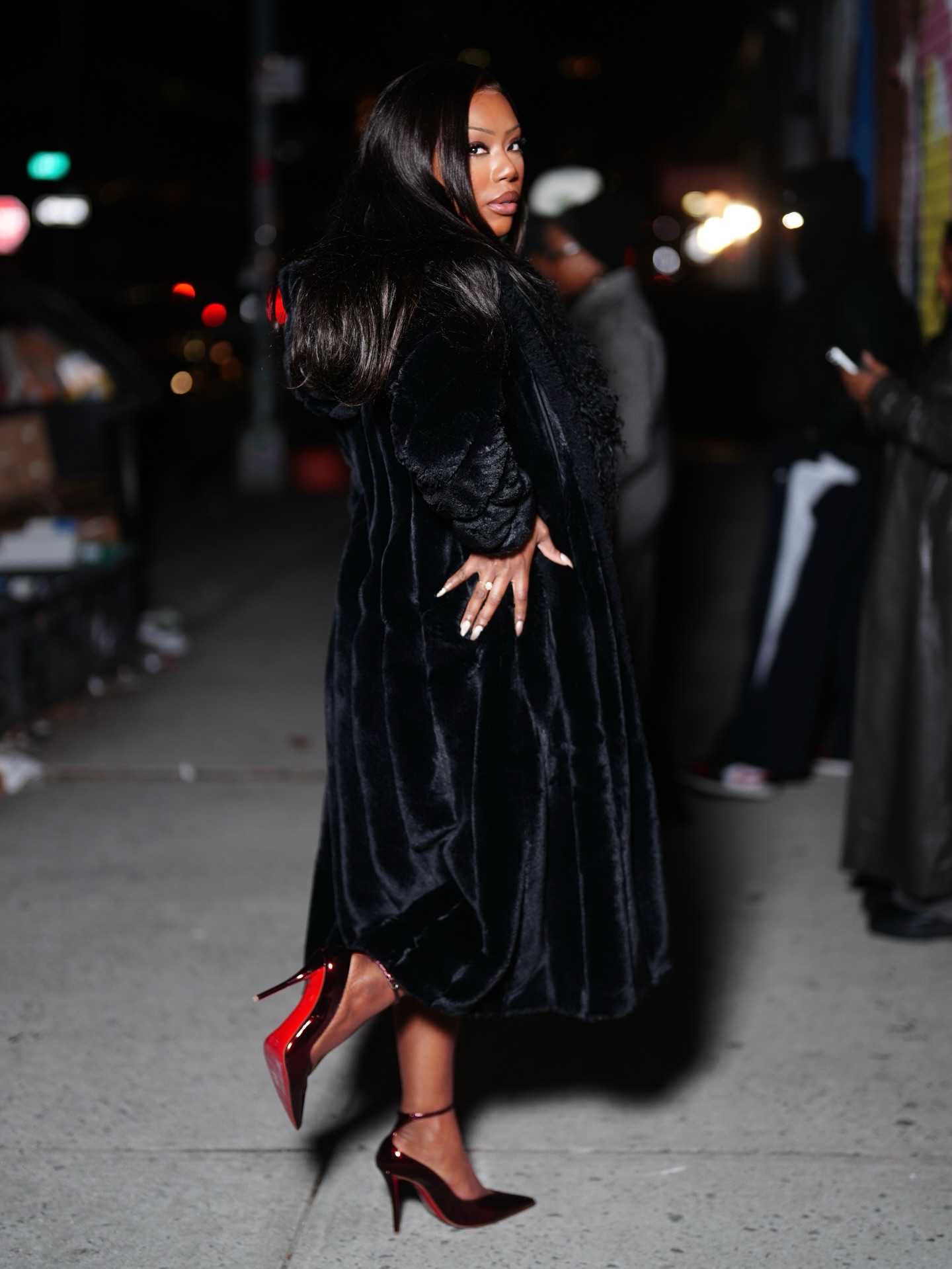
Image Credit: @ivie.ani
Today, the conversation around Afrobeats has taken on a new sheen. The genre isn’t simply burgeoning anymore; it is dominating on a global scale so much so that some have begun to wonder whether it has become too globalized. Ani, who has spent years helping map the world of Afrobeats as we know it, doesn’t share that concern.
“I don’t think Afrobeats has ‘jumped the shark.’ I don’t think it’s dead and I don’t think it’s falling off. I think it’s probably in need of evolution, and the ebbs and flows of that evolution look different all the time,” Ani tells Amplify Africa. “People have the same conversation about hip-hop every five years: ‘Hip-hop is dead.’ The newest version of that conversation is that hip-hop isn’t selling anymore or that there aren’t enough number ones. There was even a period recently when there wasn’t a rap song at number one on the Billboard Hot 100. So I don’t have that sentiment about Afrobeats. I do think there’s still a lot more that can be done and a lot more room for expansion, and I still think that’s possible. I don’t think Afrobeats has reached that point yet.”
Ani’s perspective on evolution extends beyond Afrobeats and into journalism itself. At a time when many believe the art form is in decline because of technological shifts and the rise of independent creators, Ani sees something else: an industry changing shape.
In this conversation, we explore how Afrobeats’ past and future intersect, what happens when a distinctly African sound becomes a global phenomenon, the evolving role of music journalism, and what it means to document a culture while it is still being made — and so much more.
Image Credit: Instagram @ivie.ani
This interview has been edited and condensed for clarity and flow.
Desmond Vincent: You’ve been covering African music and culture for a long time, and you were among the journalists documenting Afrobeats for Western audiences before the genre became the global force it is today. Do you remember when you first felt compelled to make African music a central part of your work?
Ivie Ani: I don’t remember the exact first moment, but when I started my career, I was covering culture. I got my degree around 2014 and was covering everything under the umbrella of culture as it pertained to mainstream media in America. That included politics and music, but at the time, it was primarily hip-hop, R&B and pop music anything that was considered popular American music.
I didn’t start out covering Afrobeats, Afropop or African music. I transitioned into that. Around 2017 or 2018, I started covering different forms of African cultural production, with a specific emphasis on Afrobeats.
But I remember the period around 2015 and 2016 when I realised Afrobeats was probably going to go mainstream in the US. It was still very difficult to get publications here to get on board with covering these artists. Now you’ll find a million cover stories from Western media outlets about these artists, but back then, it was difficult to get them interested.
So I took the same style and techniques I had developed covering culture and applied them to this newer kind of African music because I could see that it was becoming more popular. I also felt there was a need to translate what was happening in Africa for audiences in the US.
Desmond Vincent: Afrobeats is now undeniably global, but there’s still a lot of conversation around whether its globalisation is ultimately a good thing. Do you think Afrobeats becoming increasingly global is a problem, or are people simply reacting to how visible and marketable the genre has become?
Ivie Ani: I think it’s par the course. It’s a popular genre globally, although there’s still some trepidation around saying that it has gone mainstream. I’ve heard people argue that there’s still a lot more that needs to happen before Afrobeats can be considered a mainstream genre, but I think it fits the bill.
I don’t see an issue with the globalisation of Afrobeats. What I see an issue with—or what can become an issue—is what happens in response to that globalisation.
That comes down to questions of ownership, longevity and proper documentation. Those are key issues facing artists, labels, executives and everyone involved in an artist’s career.
The issue isn’t necessarily that Afrobeats is becoming a global force. It’s what happens when a genre or movement leaves its borders, expands and gives more people access to it. The same thing happened with hip-hop as it became a global and economic force. There was a lot of trepidation around that too.
Desmond Vincent: If you had to pick the definitive Afrobeats or Afropop albums of the 2010s and beyond, which records would make your list?
Ivie Ani: My most recent favourite is Rema’s HEIS. I really think that’s going to go down as a historic Afrobeats album in terms of the sonic evolution of the genre. I think Rema did a really good job of pushing Afrobeats into something more cinematic.
As far as the 2010s, I’d say Wizkid’s Ayo, Made in Lagos—although that came out in 2020—and Burna Boy’s Outside.
And can I include the 2020s too?
Desmond Vincent: Absolutely.
Ivie Ani: I think Ayra Starr’s latest album is going to be instrumental in making people more comfortable with the term Afropop. But 19 & Dangerous was also important.
Desmond Vincent: Is there something about Afrobeats coverage that you think isn’t being covered as thoroughly or accurately as it should be? Is there an angle we’re overlooking?
Ivie Ani: I think it depends on which side of the world the coverage is coming from.
The issue I find with American coverage is inaccuracy. There was a period when there was a lot of excitement around including Afrobeats artists and music in Western coverage. There was this excitement about understanding this new genre, and that excitement sometimes eclipsed accuracy on both sides—the artists and their teams pursuing and accepting coverage, and the people covering them.
I remember there being a lot of inaccuracies, even around the terminology. People still get the name of the genre wrong. They’ll drop the “s” and call Afrobeats “Afrobeat,” without understanding that they’re actually referring to the older genre that came before Afrobeats.
Desmond Vincent: What about coverage from the continent itself? Are there issues there too?
Ivie Ani: I don’t do editorial or media coverage in Nigeria per se, so I can’t speak as directly to the issues on that side. But I do wonder about the way artists’ relationships with Western media can affect opportunities for African publications.
The more visibility and success an artist gets globally, it sometimes seems like fewer opportunities for coverage are given to publications, outlets and platforms on the continent because there’s such an emphasis on speaking to Western media for that validation in the US and Europe. I think that might be one of the issues on that end. But here, I think the main issue is probably inaccuracy. And that could potentially be fixed by allowing more people who are knowledgeable about the culture and the music to cover these artists.
But that’s a whole other conversation.
Desmond Vincent: There was some conversation recently around the decision by the MTV VMAs to remove its Best Afrobeats category. Some people interpreted that as a sign that Afrobeats was no longer as culturally relevant or commercially hot as it once was. Do you see it that way?
Ivie Ani: There could be so many reasons why they decided not to include that category this year. Internally, there could be a number of things happening that we simply wouldn’t know about.
But I don’t automatically equate removing the category with Afrobeats being “too global” or losing relevance. If anything, I think they would keep the category if Afrobeats were too global because it would mean they wanted to focus on and include this genre that everybody is still talking about and listening to globally.
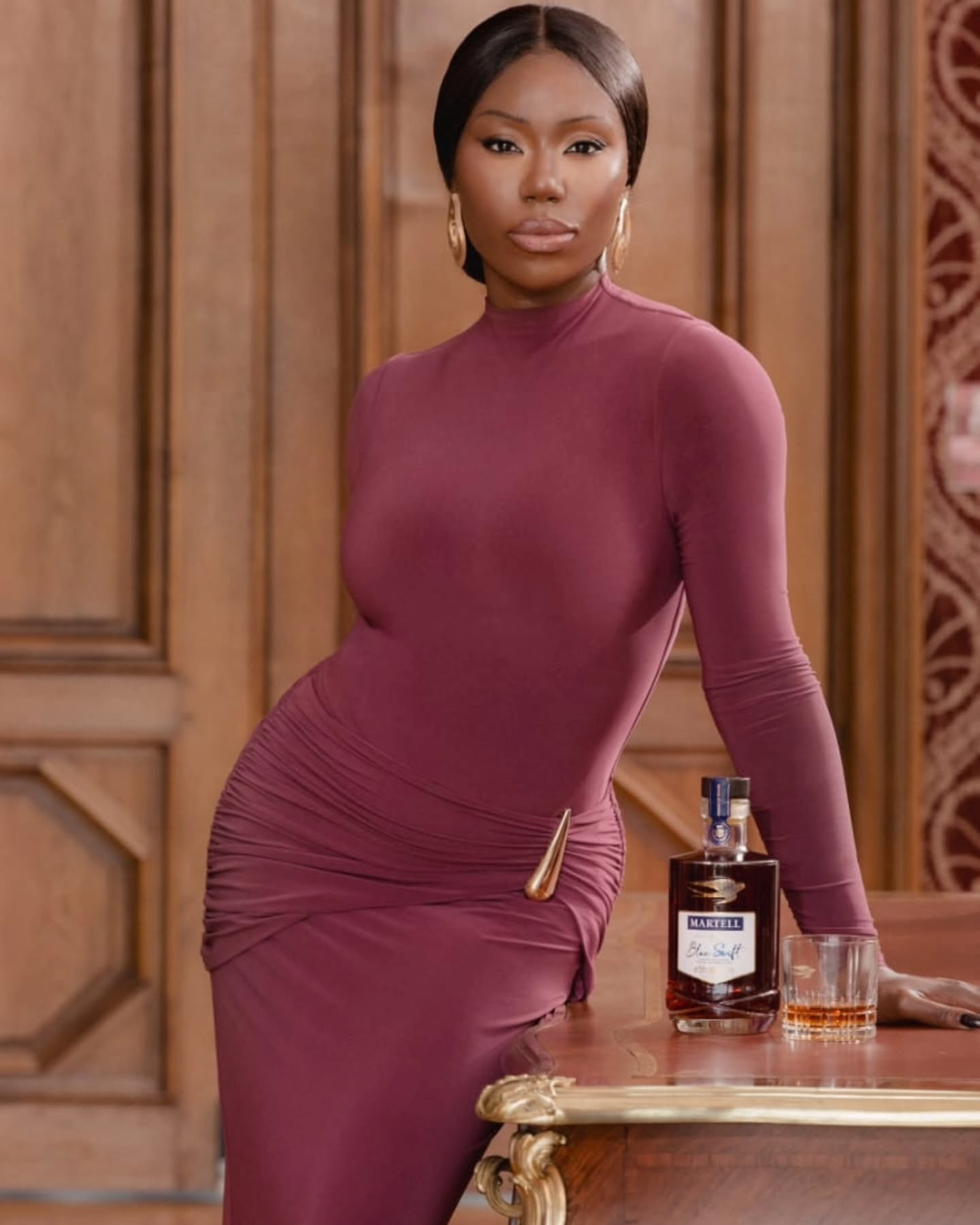
Image Credit: Ivie Ani & Martell
Desmond Vincent: You were recently announced as Martell’s Culture Ambassador. What does that partnership mean to you?
Ivie Ani: I know that in the world of media, it might seem a little unorthodox to partner with a brand of this magnitude, particularly as a media professional, music journalist, culture journalist, writer, editor or host.
But to me, it aligns in so many ways because of the brand’s commitment to storytelling and its specific commitment to documenting the culture behind Afrobeats.
What we’re seeing now is brands being invested in media, and everyone being invested in media. Think about all the people who now have their own mini media networks—artists, celebrities, athletes, brands. Think about everyone who has a podcast, a show or a series.
There’s this desire to focus on media, and I can only commend brands, companies, organisations and outlets that actually focus on uplifting independent media, journalists and media workers who exist within this ecosystem with or without a formal position or media job.
So Martell’s vision of doing that with Afrobeats, and having people be part of that documentation and storytelling, is really important to me because that’s what anchors my career at this point.
Desmond Vincent: If you had to create a signature cocktail for yourself, what would it be?
Ivie Ani: My signature cocktail? This is going to sound very unorthodox.
I would do Martell Swift or Martell VS and make an espresso martini. I know espresso martinis are usually made with a lighter spirit, but I would venture to say: go dark, go with a cognac.
Martell Swift would probably be good because that brown with the espresso and Baileys—I really feel like a Martell espresso martini could work.
Although I like Martell on its own. I like it neat or on the rocks. I don’t even think it needs to be mixed. I like to sip it like that.
Desmond Vincent: You’ve conducted so many memorable interviews throughout your career. Do you have a favourite?
Ivie Ani: Yes. Wow.
I’m going to say maybe Naomi Campbell. I think the Davido interview—my last interview with him—is one of my favourites. I also really like Mya, the second time I interviewed Mya, and French Montana’s interview was iconic.
I have a lot of favourites.