
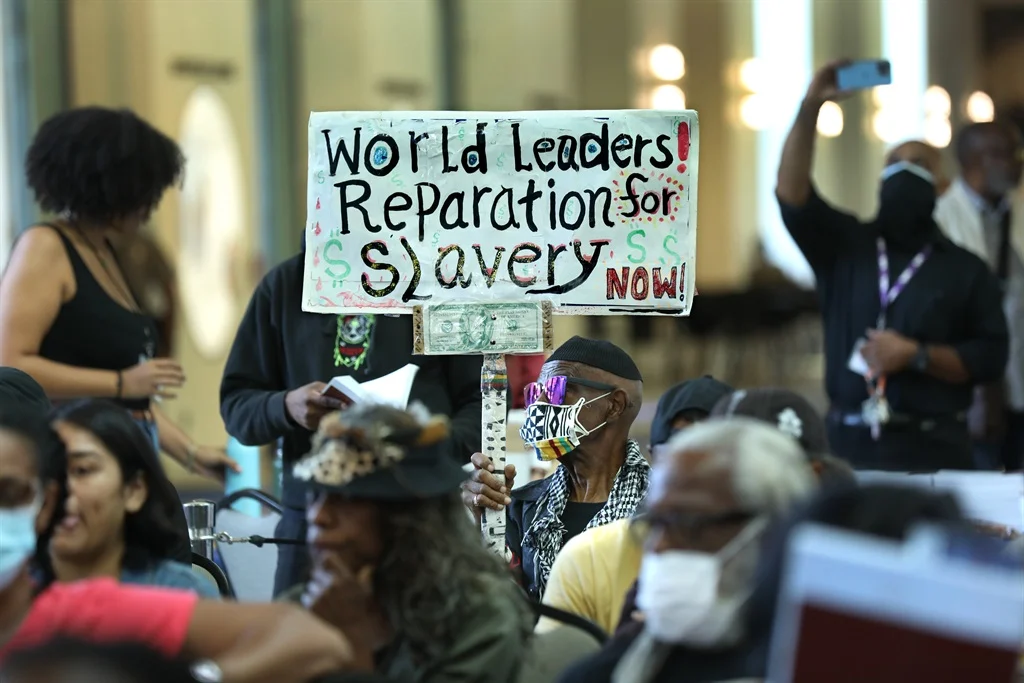
African Union and CARICOM leaders meeting in Ghana have endorsed a joint 19-point reparations framework demanding formal apologies, financial compensation, debt relief, cultural restitution, and climate justice from countries that benefited from slavery and colonialism.
The proposal will now be taken to the United Nations General Assembly.
Despite the plan being adopted by the African Union and the Caribbean Community (CARICOM) Commission on Reparatory Justice, it does not mention which specific countries should apologise. What we do know is that it calls for the establishment of a Global Reparations Fund, comprehensive debt relief and cancellation for affected countries, and reforms to international financial institutions to ensure fairer representation for nations in the Global South.
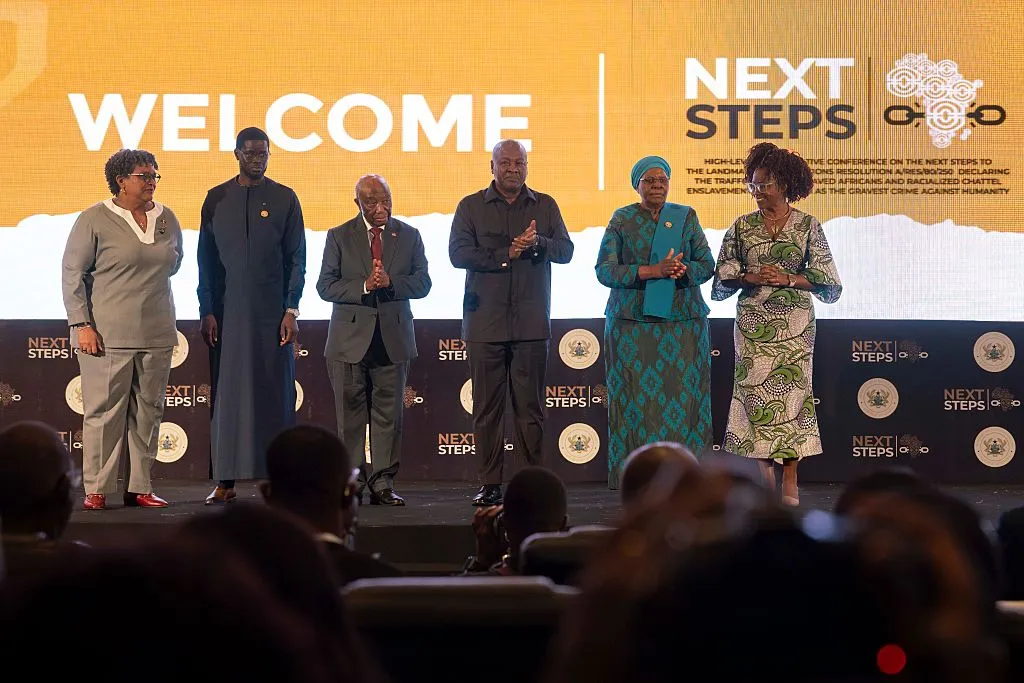
Image Credit: Ernest Ankomah/Getty Images
According to Reuters, Ghana’s President John Dramani Mahama told delegates: “None of us gathered in this hall today can be held personally responsible for the atrocities of the transatlantic slave trade. History does not ask us to inherit guilt, but it asks us to inherit responsibility.”
French President Emmanuel Macron said in a virtual call that enslaved people “were torn from their homelands, deported, dehumanised, and treated as goods.” He also said reparations should not be seen “as an end point, or a cheque written to bring the story to a close.”
Image Credit: Carolyn Cole via Getty Images
This coalition between African and Caribbean nations is a historic and notable one. For years, conversations about reparations have often happened in parallel. Caribbean nations pushed their demands through CARICOM. African governments advanced their own initiatives. Scholars, activists, and diaspora organisations carried the conversation forward across universities, conferences, and civil society networks.
Now, those streams are beginning to merge.
That shift matters because the demand itself is evolving. A generation ago, reparations discussions were often framed around historical acknowledgement. Today, supporters are making a broader argument. They point to the ways the transatlantic slave trade and colonialism helped shape global inequalities that continue to influence wealth, development, migration, education, and access to opportunity.
Their argument is not simply that harm occurred centuries ago. It is that some of the structures created during that period never truly disappeared.