

If you have ever lived in Lagos, you know that surviving the city can feel like a game in itself. There is rent to pay, money to make, danfo buses to catch and an endless series of decisions that can make or break your day. Now, you can experience a version of that life without leaving your browser.
Lagos Life, a free multiplayer browser game created by Nigerian software developer Shalom Rayhamen, has become one of the internet’s latest obsessions. Launched on October 1, the game attracted more than one million players in its first three days. By October 9, its creator reported more than five million players, along with tens of millions of visits.
Shalom Rayhamen
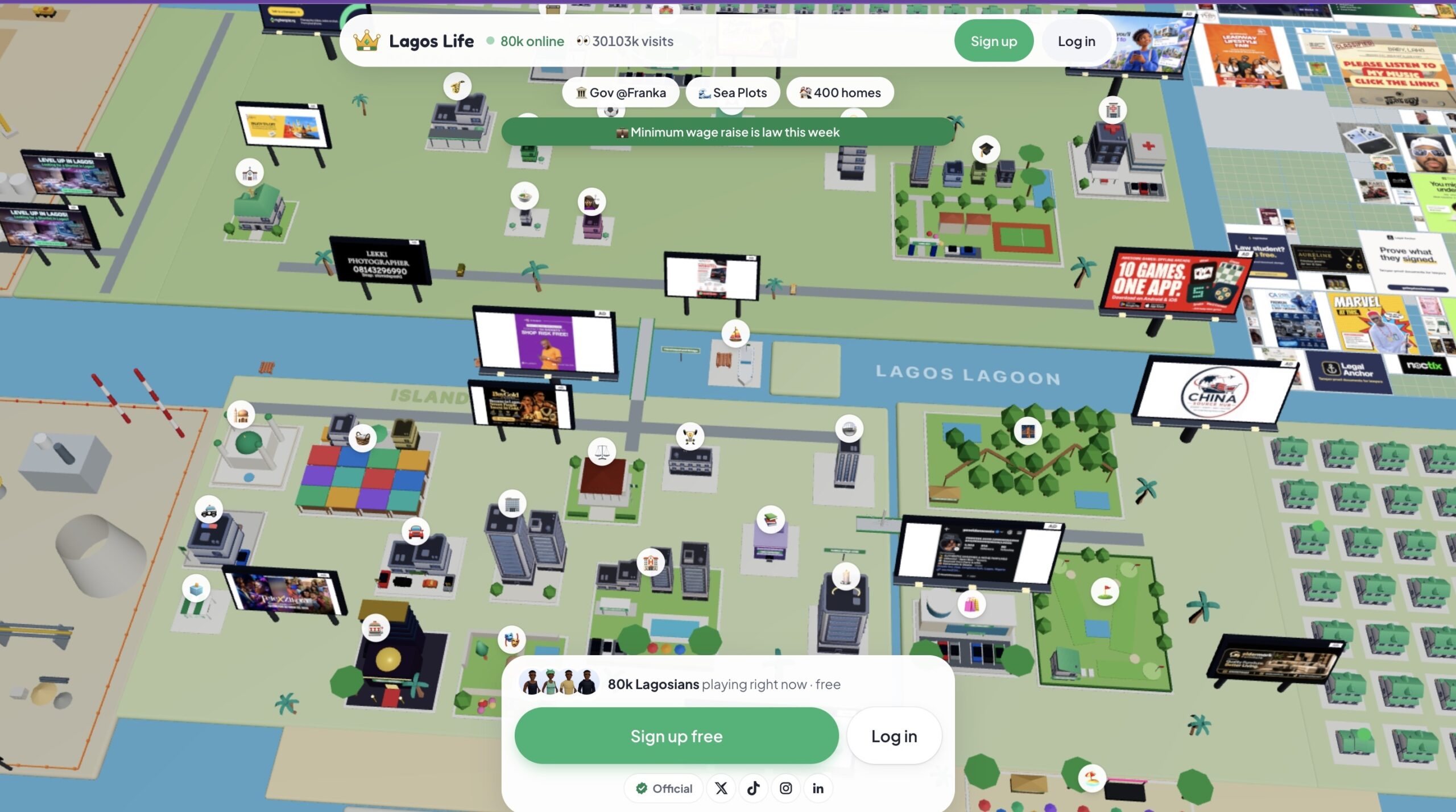
The premise is straightforward: create a character, find a job, earn virtual naira, rent a flat and make your way through a digital version of Lagos. There are danfo buses, familiar landmarks, social hangouts and other players moving through the same world. Think The Sims, except the setting is Lagos and the hustle feels a little closer to home.
Rayhamen has said the idea came from her childhood love of The Sims 3 and a desire to imagine what the game might look like if its characters lived in a world inspired by her own. Another recent browser game called Lagos Run, which lets players drive a danfo through the city, helped spark the idea.
What makes the story particularly striking is how quickly she built it. Rayhamen told The Cable that she started working on Lagos Life at 9 p.m. on September 30 and released it at 7 a.m. the following morning, using AI tools to help with research and coding. Within days, the project had attracted millions of players and the attention of some of Nigeria’s biggest technology founders.
On October 9, Rayhamen announced that Vatar, the company behind the game, had raised $500,000 in an angel funding round. The investment came from Abdulhamid Hassan, CEO of fintech company Mono; Nathan Nwachuku, CEO of Terra Industries; and Flutterwave CEO Olugbenga Agboola, who invested through his fund, Resilience17. The round reportedly closed in a day and valued Vatar at $10 million.
But Lagos Life is not just an internet curiosity. There is already a business taking shape inside its virtual streets. Brands can pay for billboards and virtual plots, while musicians can promote their songs in the game’s clubs. Other revenue streams include corporate partnerships and football streaming. Rayhamen has reported that Vatar has earned and contracted more than $170,000 since launch, although that figure combines money received with deals signed rather than confirmed profit.
It is an early example of how a game built around a specific culture can become both a social space and a commercial platform. Instead of asking players to imagine a fictional world somewhere else, Lagos Life gives them one they might already recognise, complete with the familiar rhythms of making money, finding somewhere to live and trying to get ahead.
For Rayhamen, the plan extends beyond Lagos. In announcing the funding, she wrote: “Lagos is just the beginning. We’re building entire worlds, and there’s so much more to come.” Vatar says the new capital will go towards developing its platform and bringing additional cities online.
For now, though, Lagos is keeping the internet busy. And if millions of people are willing to log in to experience a simulated version of a city that can already be exhausting in real life, perhaps the appeal is not simply escaping Lagos, but seeing a familiar world recreated on their own terms.